

The Season Between Warmth and Cold & The Memory of Doraji-Cheong
(Source:linkdea)
For many of us, this season offers more than just blossoms — it also brings runny noses. Itchy eyes accompany the relentless fog of allergy season. For me, it’s become a kind of seasonal ritual: I wake up congested and pocket tissues. I wonder whether it’s the fierce pollen of the American East Coast, or just my own immune system waving a white flag.
And yet, in moments like these, my mind drifts back to Korea — to the smell of honey and earth rising from the kitchen. When I was a child, especially during this time of year, my grandmother and mother would quietly reach for a glass jar tucked away in a cupboard. Not filled with fruit, but with roots. Long, pale slices of balloon flower root (doraji), submerged in amber honey, waiting silently, like a remedy passed down in whispers.
I had a weak respiratory system growing up — chronic sore throats, endless coughs, and a voice that easily disappeared into hoarseness. And so, my mother would make doraji-cheong, carefully washing and slicing the root, pouring in golden honey, then waiting days — sometimes weeks — for it to infuse. She didn’t call it “medicine,” but she handed it to me like a treasure: a teaspoon in warm water, or stirred into tea. And with it came her quiet hope — that it would soothe, that it would help.
In Korea, syrups like these are known as yak-cheong (약청) — medicinal syrups made not from fruit, but from plants that once grew in the margins of forests and kitchens, known for their healing powers.
They look like preserves, but inside each drop is something more than flavor — there’s care, memory, and a philosophy of nourishment that moves slower, deeper.
Cheong, a Sweetness Rooted in Healing
(Source:kwanjuwon)
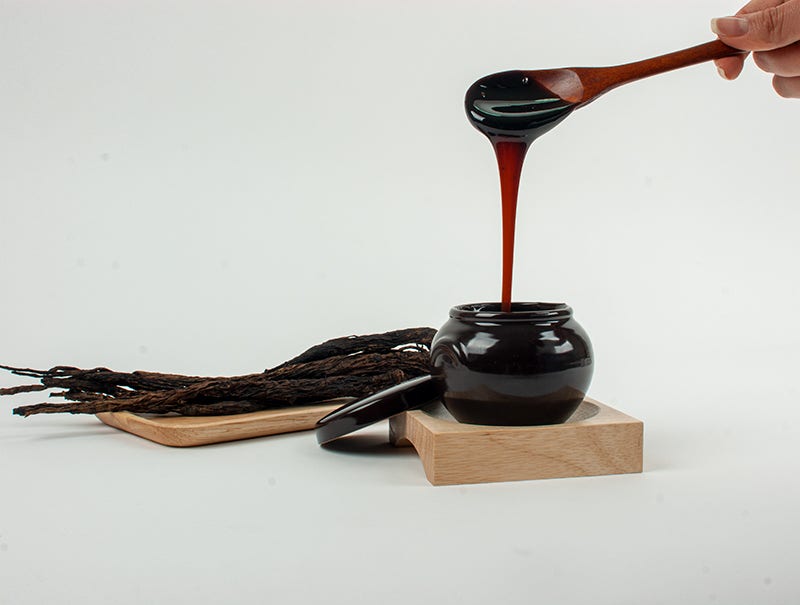
Today, the word cheong (청) usually brings to mind brightly colored fruit syrups — lemon slices suspended in sugar, or plum flesh slowly turning into a thick, tangy glaze.
But originally, cheong wasn’t about indulgence. It was about preservation — not only of ingredients, but of knowledge, care, and seasonal wisdom.
Before refrigerators and pharmacies, people turned to what they had: honey, roots, time, and experience.
They soaked herbs and barks in honey or grain syrup. This process allowed them to gently draw out the beneficial properties of the plants without applying heat. It enabled natural fermentation, longer shelf life, and gentle extraction of nutrients and volatile compounds.
This wasn’t folklore it was a method, and a deeply practical one.
Historical texts such as the 17th-century Eumsik Dimibang and the 19th-century Gyuhap Chongseo clearly document these practices.
In these texts, cheong appears not only as a way to sweeten food, but as a technique for preserving medicinal plants and incorporating them into daily life.
In other words, long before the term “functional food” existed, Korea already had it — in a jar, on a shelf, in the steady hands of grandmothers and mothers.
A Pharmacy of Plants: What Went Into Cheong

(Source: Igor Normann-shutterstock.com)
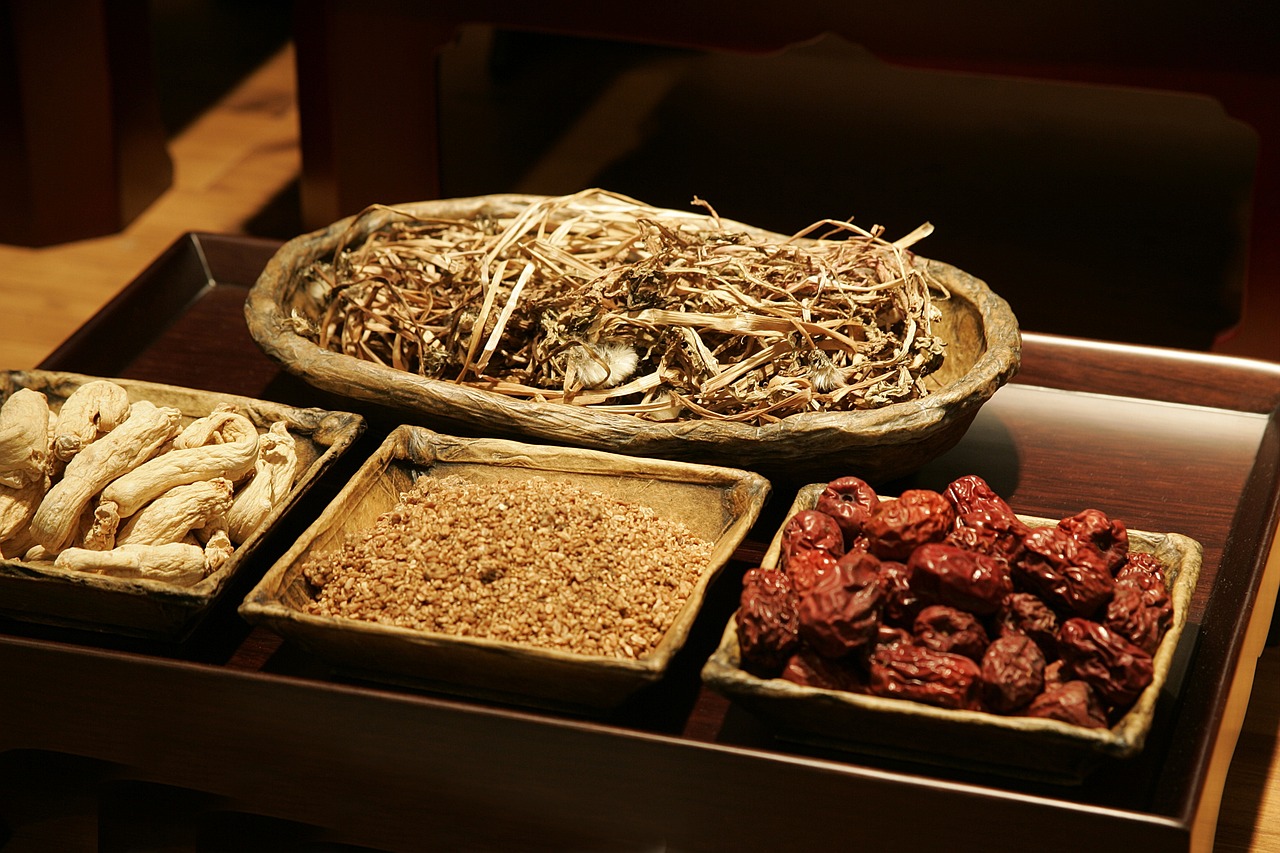
The ingredients used in traditional cheong weren’t chosen for sweetness — they were chosen for what they offered the body:
- Saenggang-cheong (Ginger): Known to warm the body, aid digestion, and fight nausea
- Doraji-cheong (Balloon flower root): Believed to soothe the lungs and throat, helpful for coughs and inflammation
- Gyepi-cheong (Cinnamon): Stimulates blood flow and internal warmth, especially in cold weather
- Gamcho-cheong (Licorice root): Mild, harmonizing, and said to protect the stomach lining
- Seokcheong (Rock honey): Unrefined wild honey, harvested from remote mountain cliffs, prized in traditional Korean medicine for its purity and life-giving qualities
These syrups weren’t taken as strict “medicine,” but neither were they casual snacks.
They lived somewhere in between — an everyday ritual with a deeper purpose, a form of gentle, continuous care.
In the colder months, or when someone was under the weather, a spoonful of cheong in hot water was often the first thing offered.
It was a way of saying, “Let’s take care of you,” without needing to say anything at all.
Why These Syrups Faded — and Why They’re Returning
Like many traditional practices, cheong gradually faded from everyday life over the course of the 20th century.
As modern pharmaceuticals became more accessible — along with the rise of over-the-counter syrups and mass-produced sugar — traditional cheong began to feel outdated. While fruit-based cheong continued to appear in kitchens and cafés for its flavor, the medicinal versions made with roots and herbs quietly receded into memory, surviving mostly in rural homes and the hands of elders.
But the shift wasn’t due to just one factor.
It was the combined weight of industrialization, fast-paced lifestyles, improved preservation technologies, and a gradual decline in public familiarity with traditional ingredients.
What was once common sense became niche knowledge — the kind passed down quietly, or not at all.
Yet today, the pendulum is swinging again.
In the search for “natural” remedies, ancestral wisdom, and slow living, people are returning to cheong — not just as a sweetener, but as a story, a ritual, and a connection to something slower and older.
Modern versions of medicinal cheong now appear in boutique cafes and wellness shops:
- Herbal lattes with jujube and cinnamon cheong
- Sparkling beverages featuring ginger-citron cheong
- Yogurt and kombucha paired with omija (five-flavor berry) cheong
What once simmered on a grandmother’s stove now rests on modern menus — repackaged, yes, but still holding that quiet intention.
A Philosophy in Every Drop
In a world driven by speed and efficiency, Cheong invites us to pause.
It doesn’t demand urgency. It doesn’t promise a miracle.
Instead, it offers something subtler — a sweetness that takes time to make, and time to feel.
Every jar tells a story: of someone choosing ingredients carefully, slicing patiently, pouring slowly, and waiting days — sometimes weeks — for the magic to unfold.
It’s a small act of resistance against the rush of modern life. It says: healing doesn’t always need to be fast. Sometimes, it just needs to be intentional.
Cheong reminds us that food can be more than fuel — it can be medicine, memory, and meaning.
That what we preserve is not just flavor, but thoughtfulness. And that the most nourishing things in life might come not from a lab, but from a spoonful of honey, a humble root, and the wisdom to wait.
So the next time you taste a fruit syrup, consider this:
Underneath Korea’s colorful world of cheong lies something older, deeper — a sweetness that began not with berries, but with roots.
If you’ve made your own cheong or tasted a traditional syrup, share your story below — these memories deserve to be preserved, too.





 Boss Brief
Leave a comment