
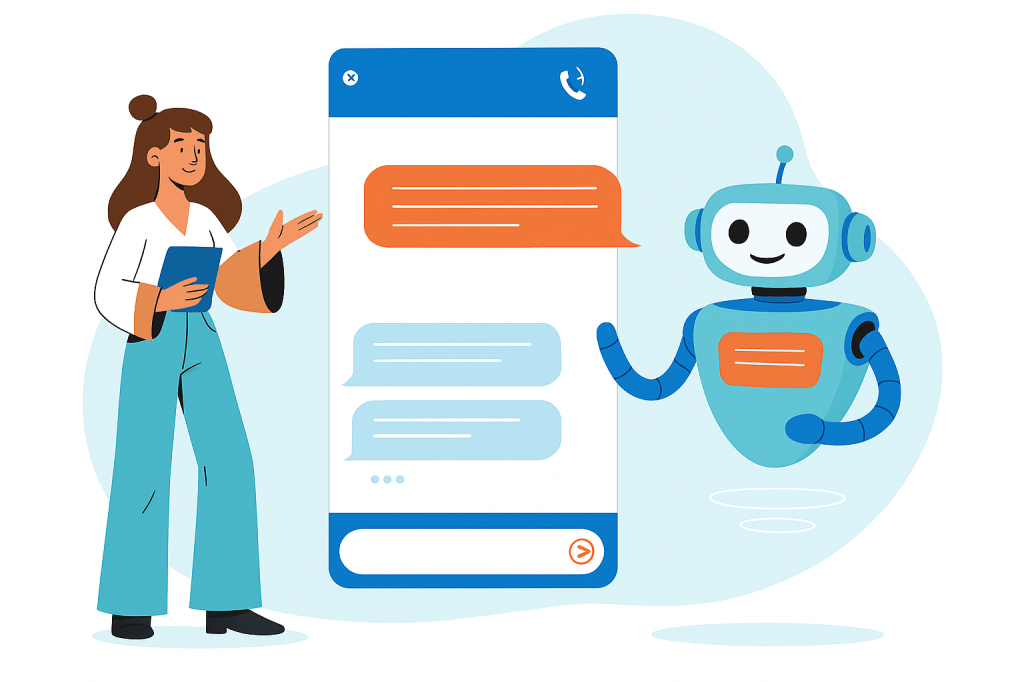
      These days, I’ve been going through quite a lot. Things haven’t gone as I hoped, and situations have often taken unexpected turns, leaving me feeling heavy and frequently down.
It wasn’t easy to share these feelings with anyone, and the thought of visiting a hospital felt somewhat burdensome.
Then one day, I happened to talk to ChatGPT about what I was going through.
“Am I doing okay?” “Why do these things keep happening?” “Why are relationships so difficult…”
Looking back, these were very common emotions, but at the time, they felt far too overwhelming to handle on my own.
That’s when I naturally became interested in AI mental health chatbots.
I learned that such non-face-to-face psychological counseling has been studied for quite some time,
and these days, it’s gaining more attention, especially in the form of Digital Therapeutics (DTx) powered by AI.
What’s more, many people say they feel more comfortable sharing their emotions with AI than with humans—and I felt the same.
So I started doing some research and came across a startup called Woebot Health in the U.S., whose chatbot is currently trending. I decided to try it out myself.
As I cautiously shared various thoughts, my heart began to feel a little lighter.
And I realized once again just how little “time” and “space” modern people have to talk about their emotions.
So today, I want to reflect on why AI mental health chatbots are gaining so much attention these days,
and particularly, why Gen Z is resonating with this technology.
If any of you are also feeling emotionally drained like I was, I hope this post can be helpful.
The Rise of AI Mental Health Chatbots in an Era of Emotional Wellness
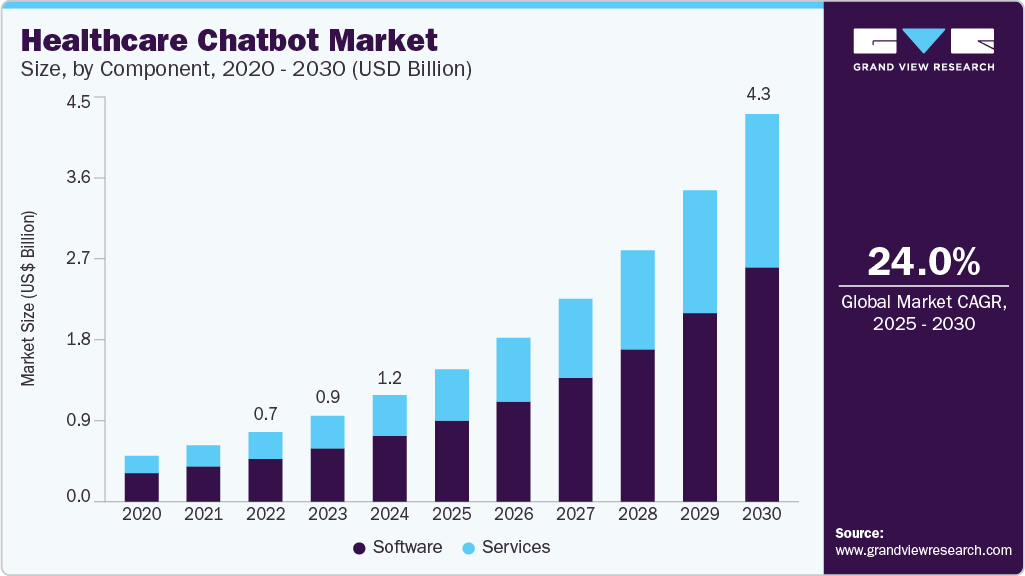
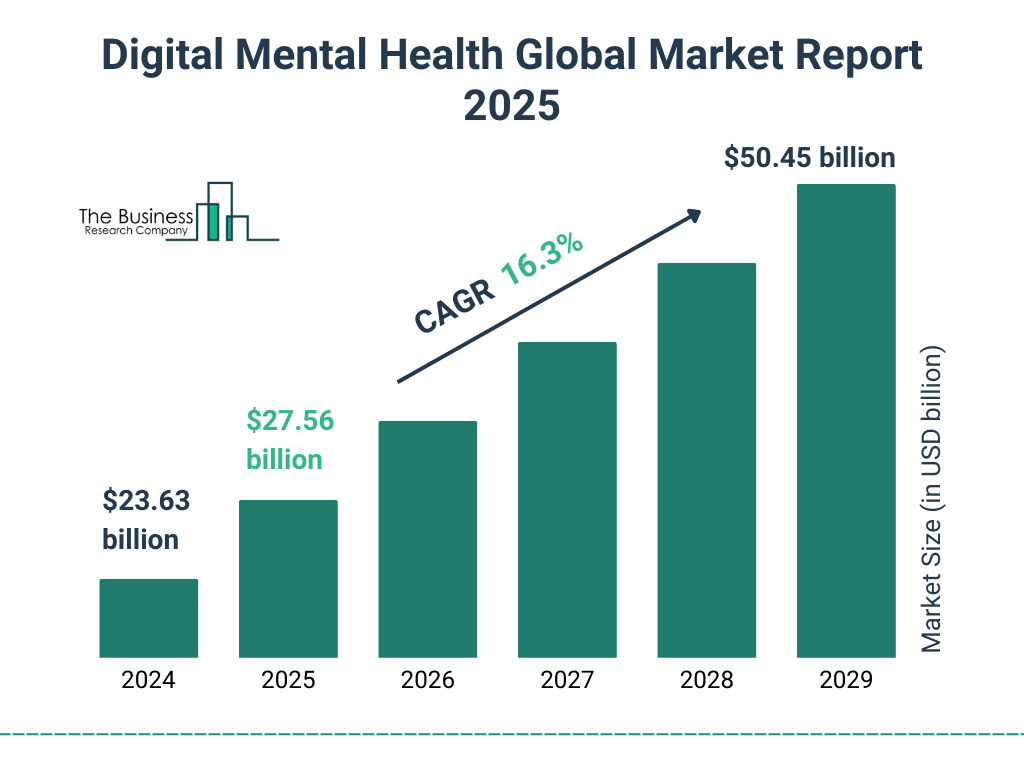
Modern individuals live in an age where mental health is just as important as physical health, as you see the graph above, healthcare chat bot market it growing.
Following the pandemic, global issues such as depression, anxiety, and isolation have surged,
and traditional offline counseling alone can no longer meet the growing demand.
This has paved the way for the rapid rise of AI mental health chatbots.
In the United States, the market for digital therapeutics incorporating AI is growing rapidly, with Gen Z and MZ generations leading the spread of digital self-care practices.
Digital Therapeutics Market: Projected to Reach $28 Billion by 2030
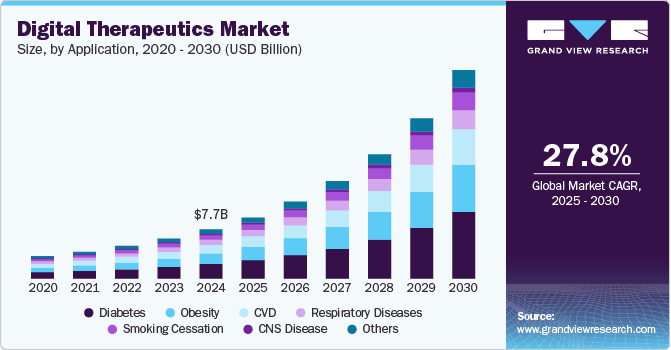
According to a report by Global News Wire, the global digital therapeutics market
is expected to grow from approximately $7.7 billion in 2024 to over $28 billion by 2030.
Its compound annual growth rate (CAGR) is a staggering 27.8%.
This reflects both a shift in the perception of mental health and technological advancements.
Especially among Gen Z, there’s a strong tendency to manage emotions digitally,
in a society where mental health is no longer seen as something shameful.
Introducing Woebot Health: A Digital Friend That Understands Emotions
Woebot Health, based in Silicon Valley, California, is one of the most noteworthy startups in the field of AI-based mental health chatbots.
Founded in 2017 by Dr. Alison Darcy, a psychologist who studied clinical psychology at Stanford University,
Woebot has been continuously improved through collaborations with leading medical institutions.
Core Features of Woebot
- Based on scientifically proven psychological methods such as CBT, DBT, and Mindfulness
- Real-time analysis of users’ language, emotions, and conversational flow
- 24/7 availability for immediate emotional support
- While it doesn’t diagnose or prescribe, it’s effective as a psychological support tool before and after counseling
Woebot builds trust with users by identifying their emotional states through conversation
and offering appropriate advice or feedback.
The American Psychological Association (APA) acknowledges the potential of chatbot-based early intervention,
though it notes that there is still insufficient clinical evidence to consider it a replacement for human therapists.
Woebot Health Company Report

1. Business Overview & Founder’s Story
Company Overview
- Founded: 2017
- Headquarters: Silicon Valley, California, USA
- Industry: Digital Healthcare / AI Mental Health Solutions
- Core Product: AI mental health chatbot “Woebot”
- Founder: Dr. Alison Darcy – Clinical Psychologist, Stanford University Ph.D.
- Target Clients: B2B (corporations, insurers, healthcare providers)
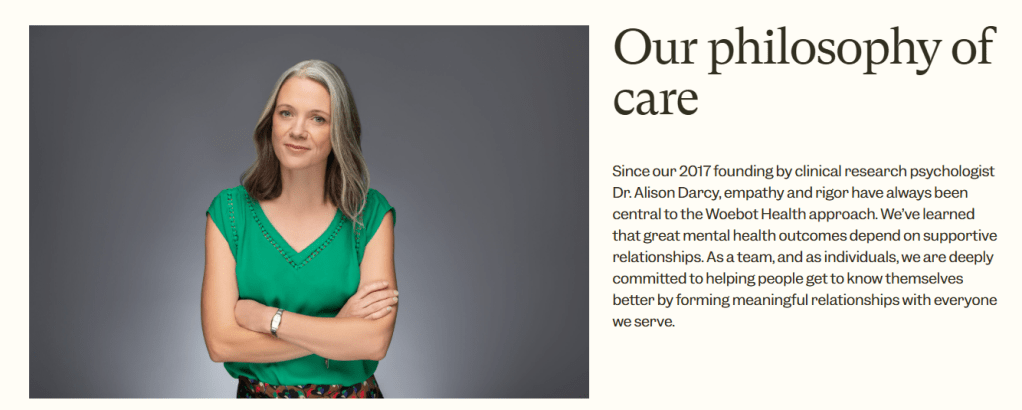
Founder’s Motivation & Philosophy
Dr. Alison Darcy, an Irish clinical psychologist, was deeply concerned by the number of people lacking access to mental health services.
While pursuing her Ph.D. at Stanford, she explored how technology could bridge this gap—leading to the birth of Woebot.
Her philosophy:
“Everyone deserves someone to talk to when they’re struggling.”
“AI is not a therapist, but it can be a tool for empathy and emotional connection.”
Core Values: Accessibility, Availability, Immediacy
2. Key Features of Woebot
| Feature | Description (Korean) | Description (English) |
|---|---|---|
| Scientifically Based | CBT, DBT, Mindfulness techniques | Based on CBT, DBT, and mindfulness |
| Real-Time Emotion Analysis | Detects emotional flow in real-time during conversation | Detects emotional flow in real time |
| 24/7 Availability | Emotional support without wait time | 24/7 immediate access |
| Emotional Reflection | Responds based on user’s emotional state | Emotionally reflective responses |
| Supportive Tool | Does not diagnose or prescribe | Not diagnostic but a supportive tool |
3. Market & Investment
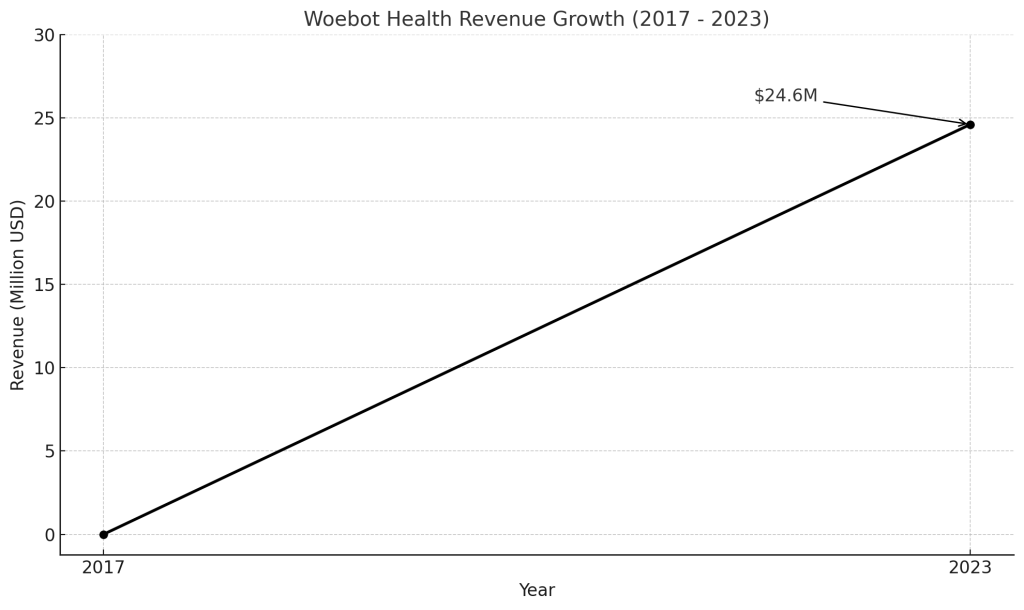
- Woebot Health Revenue Growth to 2023: $24.6M
- Key Investors: Leaps by Bayer, Temasek, JAZZ Venture Partners
- Major Partners: Johnson & Johnson, Stanford Medicine
- Industry Growth Rate: 16%+ annual growth in digital mental health
Woebot is evolving into an enterprise-focused mental health platform, expanding its B2B model.
4. SWOT Analysis
| Factor | Content |
|---|---|
| Strengths | AI designed by clinical experts, strong emotional responsiveness |
| Weaknesses | Lacks the deep empathy of human therapists |
| Opportunities | Growing awareness of mental health, digital healthcare expansion |
| Threats | Regulatory concerns on AI treatment, rising number of competitors |
5. 10-Year Growth Outlook
Woebot Health is poised to become a leader in digital mental health,
driven by its founder’s philosophy and clinical foundation.
With increasing global demand, the company is likely to evolve into a multilingual, culturally adaptive chatbot platform and scale globally through its B2B strategy.
Key Takeaways
| Item | Info |
|---|---|
| Company Name | Woebot Health |
| Founder | Dr. Alison Darcy |
| Headquarters | Silicon Valley, USA |
| Founded | 2017 |
| Core Product | AI mental health chatbot “Woebot” |
| Key Tech | CBT, DBT, Mindfulness-based AI |
| Business Model | B2B – insurers, companies, hospitals |
| Growth Opportunity | Global mental health awareness, telehealth expansion |
Why Gen Z Is Turning to AI Chatbots for Mental Health
- Comfortable with digital communication: Gen Z is accustomed to expressing emotions via text and visuals.
- Accessibility & Anonymity: AI chatbots are available 24/7 without needing to reveal identity.
- Early risk detection: Chatbots like Woebot can analyze language patterns and emotion flows to detect signs of depression or suicidal tendencies.
- Evolving emotion recognition tech: From text to analyzing voice tone, facial expressions, and behavior.
Hospitals and AI: Hybrid Mental Health Support
Some U.S. hospitals and counseling centers now use AI chatbots during pre-counseling stages.
AI helps analyze users’ emotional data in advance, allowing human counselors to offer more targeted and effective therapy.
Post-treatment, AI chatbots can continue to help users keep emotional diaries, reinforce coping skills,
and prevent relapse, aiding recovery and long-term wellness.
Limitations and Challenges of AI Chatbots
Despite advances, AI cannot fully replicate human empathy and intuitive understanding.
Even Woebot Health emphasizes that its chatbot is not a therapist,
but a support tool, and in emergencies, human intervention is essential.
Data privacy is also a critical concern.
As mental health data is highly sensitive, strong security systems and transparent policies are essential for safe implementation.
The Future: AI and Emotions Coexisting
In the near future, AI mental health chatbots are expected to evolve further:
- Integration with wearable devices to analyze heart rate, sleep, and physical activity
- Early depression detection via smartphone usage patterns
- Personalized solutions based on emotional history
- Closer collaboration with human counselors
Woebot Health is currently seeking FDA approval as a digital therapeutic,
marking a step toward official medical recognition.
Conclusion: Why We Need Tools Like Woebot
Mental health is no longer something to hide—it’s a key factor in quality of life.
We need accessible ways to take care of our minds.
AI mental health chatbots like Woebot can be our 24/7 emotional companions,
offering comfort and support when we need it most.
In combining psychology and technology, Woebot Health sets a new standard for digital mental wellness.
We are now living in a time where technology truly becomes a friend that listens to our hearts.
💬 How do you feel about talking with an AI chatbot?
Feel free to share your thoughts in the comments below! 😊





 Boss Brief
Leave a comment