

I’ve always cared about what I eat — clean proteins, healthy fats, low-carb grains. But in the past few months, I noticed something changing. My regular grocery haul — soy milk, chicken breasts, leafy greens, and cereal — had not only gotten more expensive but also harder to find. Shipments were late. Prices were unpredictable. Even store employees started commenting, “Yeah, poultry is up again.”
What’s happening?
I dug into the news, and what I found wasn’t just inflation. It was geopolitics. Specifically, the return of Trump’s tariff-heavy trade strategy and China’s drastic cuts in U.S. agricultural imports.
Soybeans and corn are more than just crops — they’re the backbone of the American food industry. They feed livestock, power our energy systems, and are in nearly everything from tofu to tortillas. When these ingredients get caught in a trade war, every part of our food system feels the shock — from what’s on our plate to how much we pay at the pump.
In this article, I explore the ongoing ripple effects of tariffs through the lens of the American consumer. From soaring grocery prices to shifts in shipping lanes and protein prices, here’s what’s changing — and what to expect next.
Not Just a Trade Fight — A Disruption to America’s Food Backbone

When Trump was re-elected in late 2024, he immediately reinstated many of the aggressive trade policies from his first term. Top of the list? Steep tariffs on Chinese goods — and in response, China slashed its purchases of American agricultural products like soybeans, corn, pork, and poultry.
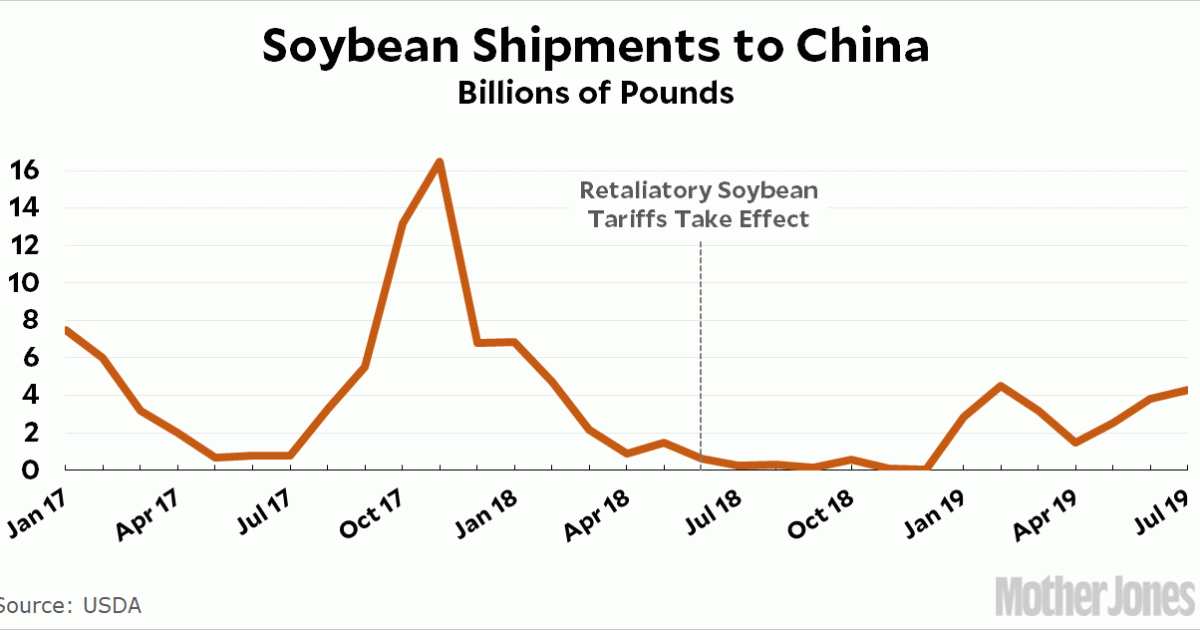
This wasn’t theoretical. According to the Agriculture Transportation Coalition (AgTC):
- In late April 2025, China canceled 12,000 tons of pork orders — the largest withdrawal since the COVID-19 pandemic.
- China stopped all new purchases of U.S. corn and soybeans as of January 2025.
- U.S. soybean exports to China dropped 15.24% year-over-year.
- Chicken imports from the U.S. into China fell a staggering 80% in Q1 2025.
This sudden contraction in overseas demand hit American farmers and food processors hard — and started to spill over into domestic supply chains.
Shipping Chaos: How Tariffs Are Wrecking U.S. Agricultural Logistics
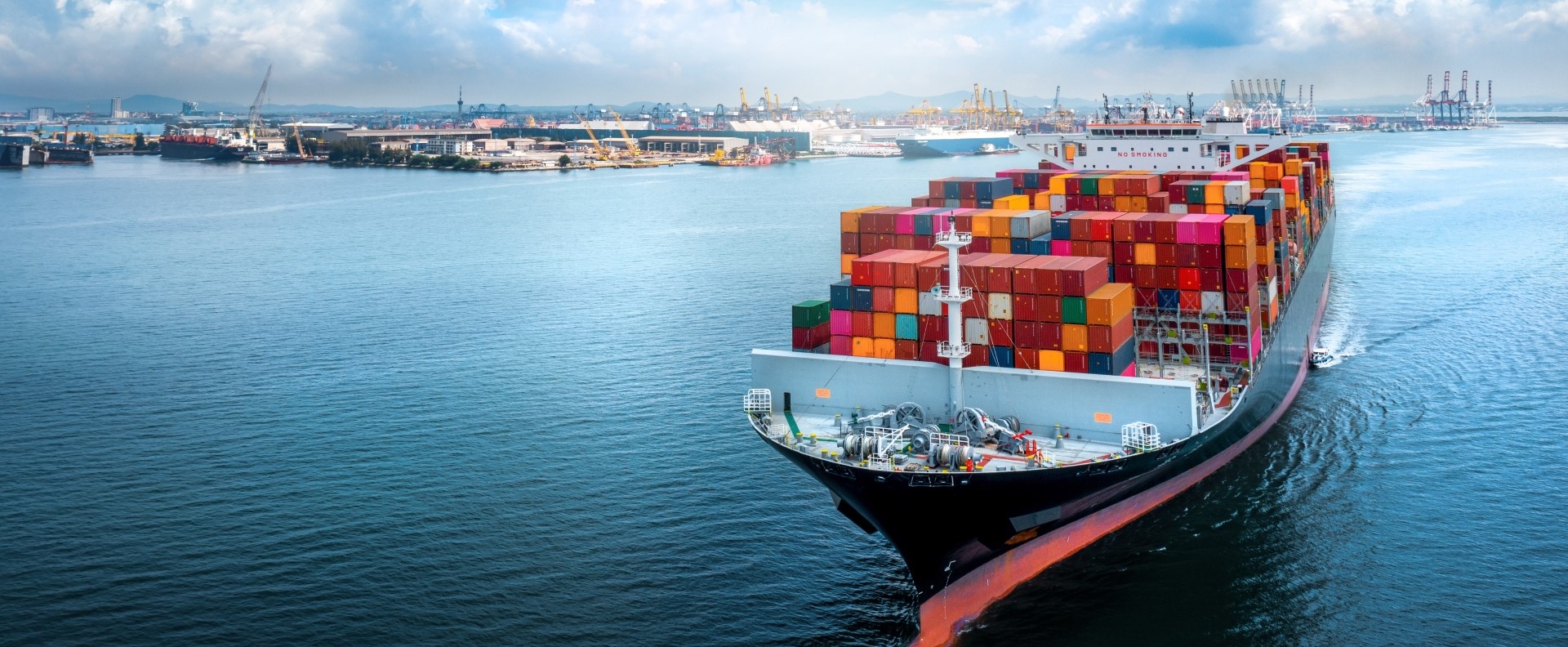
The tariff war also triggered a maritime crisis.
After Trump’s “Freedom Day” tariff announcement on April 2, China-bound cargo volume collapsed. The result? More than 68 planned sailings to East Asia were canceled through blank sailings — a practice where shipping lines skip scheduled routes to avoid loss.
- East Asia-bound agricultural exports dropped dramatically.
- Shipping premiums surged — and agricultural exporters, working with low-margin goods like soybeans and corn, found the new rates unsustainable.
A logistics coordinator from Los Angeles put it bluntly:
“We’re paying double the freight costs to secure even limited space. And for low-value exports like grains? That just doesn’t work economically anymore.”
This is critical: when fewer ships go to Asia, the entire Pacific trade route tightens. That affects South Korea, Taiwan, and Japan, too — not just China. U.S. farmers are now stuck with excess supply and fewer places to send it.
Tyson Foods: America’s Chicken Giant Feeling the Squeeze
Let’s zoom in on Tyson Foods, the largest poultry producer in the U.S., processing more than 2 billion pounds of chicken annually. For a company like Tyson, soybean meal and corn are essential — they’re the foundation of livestock feed.
In its Q1 2025 earnings call, Tyson stated:
“Feed costs have increased sharply due to supply chain volatility. That, combined with rising logistics and processing expenses, is putting sustained pressure on retail pricing.”
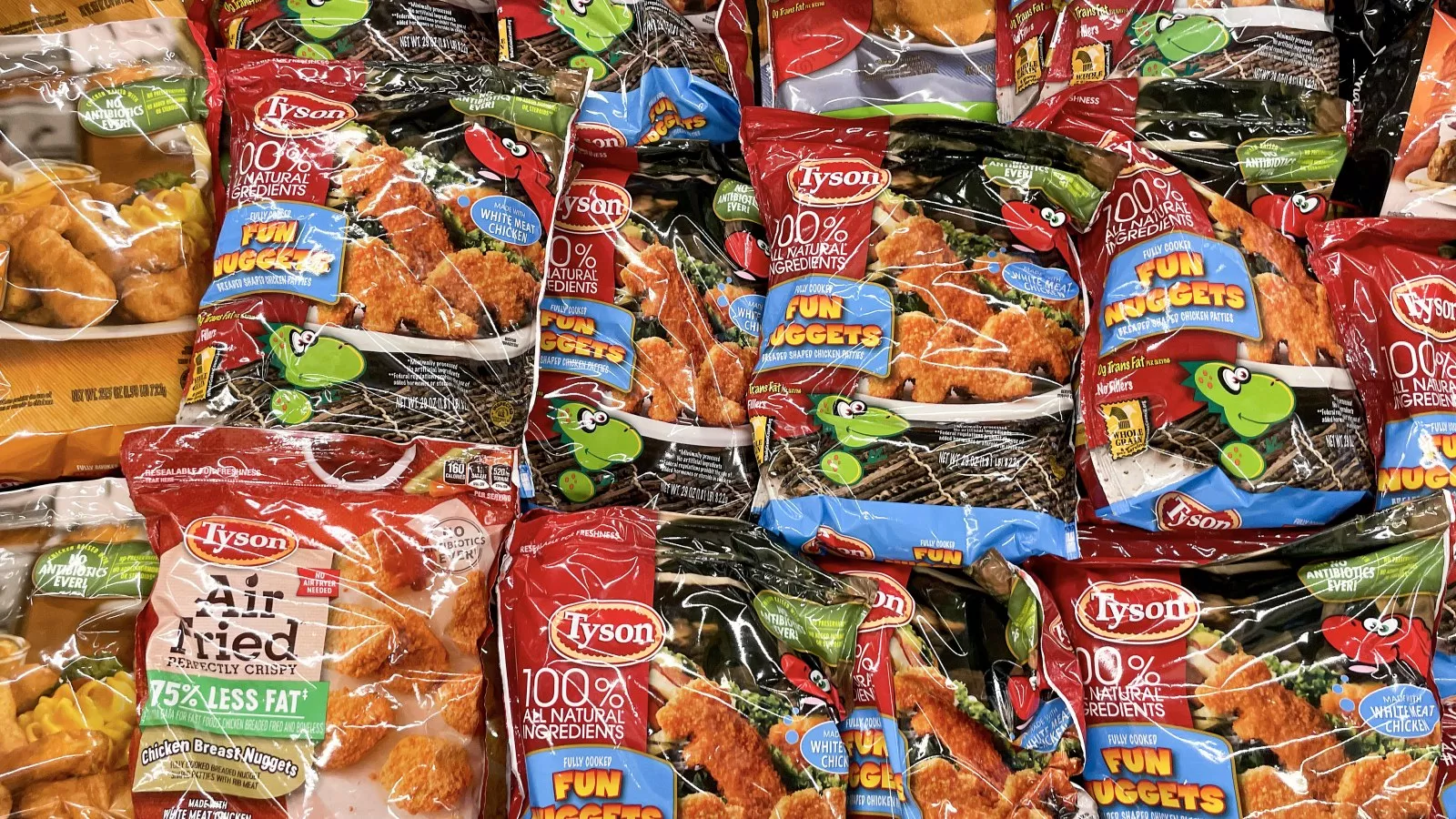
We’re already seeing this at grocery chains like Walmart and Kroger, where chicken breast prices are up 8–12% compared to last year. And it’s not just chicken. Soy milk, tofu, protein cereal, and even salad dressing are experiencing similar hikes due to disrupted soy imports.
For health-conscious consumers like me, this isn’t just inconvenient — it’s structural. It’s the whole foundation of America’s “healthy protein” culture shifting beneath our feet.
Let’s take a look of Tyson food.
1. Business Overview
- Founded / HQ: Established in 1935, headquartered in Springdale, Arkansas
- Founder & Key People: Founded by John W. Tyson; current CEO is Donnie King
- Industry & Core Products: Processes and markets chicken, beef, and pork; owns brands like Jimmy Dean and Hillshire Farm
- Revenue Model: Mix of B2B (foodservice, restaurant chains) and B2C (retail) channels
- Feed Dependency: Corn and soybean feed makes up over 59% of poultry production cost
2. Key Financials (2020–2024)
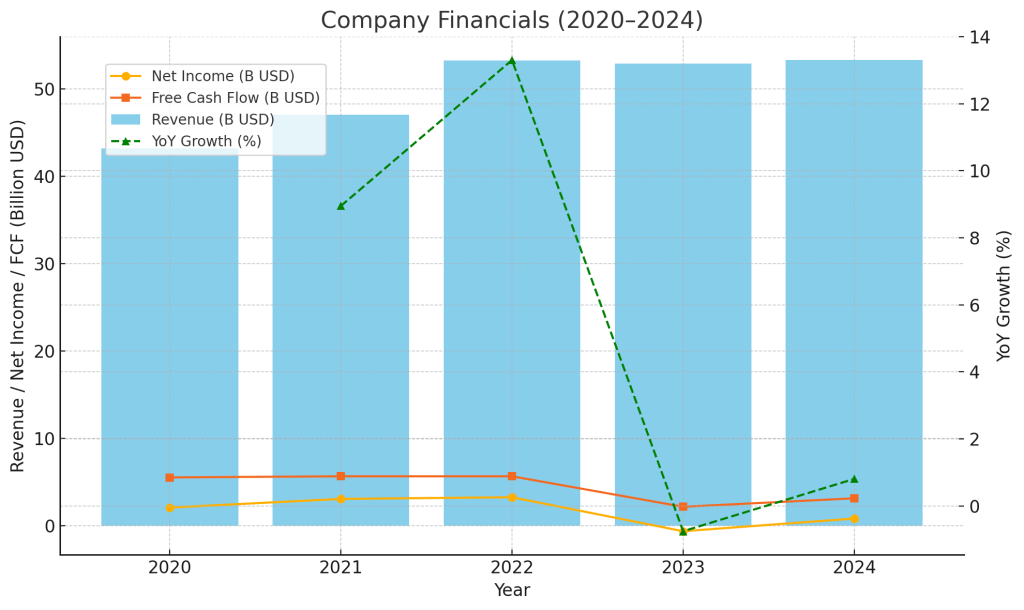
| Year | Revenue (USD) | YoY Growth | Net Income | Operating Income (EBITDA est.) |
|---|---|---|---|---|
| 2020 | $43.19B | — | $2.06B | ~$5.51B (2021) |
| 2021 | $47.05B | +8.95% | $3.05B | $5.64B |
| 2022 | $53.28B | +13.3% | $3.24B | $5.64B |
| 2023 | $52.88B | –0.75% | –$0.65B | $2.15B (sharp drop) |
| 2024 | $53.31B | +0.81% | $0.80B | $3.12B (recovery) |
3. Profitability Analysis
- Operating Margin: Strong (~10%) in 2021–2022; sharp dip in 2023, recovery in 2024
- Net Margin: 6.1% in 2022 → –1.2% in 2023 → ~1.5% in 2024
- Cost Controls: Recovery aided by plant closures, restructuring, and cost optimization efforts in 2023
4. Growth Analysis
- Revenue Growth: High in 2021–2022, stagnated post-2023
- Net Income Recovery: Positive turnaround in 2024 after a sharp loss in 2023
- Feed Price Sensitivity: High corn prices squeeze margins; lower feed prices improve profitability
5. Financial Ratios
- Leverage: Not fully disclosed, but improving cash flow and lower net leverage in 2024
- Cash Flow: Strong free cash flow reported in 2024, better financial discipline
- Valuation Metrics: Stock price range ~$55–64 USD; reflects recovery from 2023 loss
6. SWOT Analysis
| Strengths | Weaknesses |
|---|---|
| · Over 20% U.S. market share in meat categories | |
| · Vertically integrated operations | · Highly exposed to feed cost volatility |
| · Structural issues from past plant shutdowns |
| Opportunities | Threats |
|---|---|
| · Lower corn prices could expand margins | |
| · Rising chicken demand amid beef price hikes | · Unstable input costs (feed) |
| · Regulatory risks: antitrust, ESG, labor, animal welfare |
7. Core Issue: “Corn Feed Price Surge → Chicken Price Hikes”
- Feed Cost Exposure: Feed accounts for ~59% of poultry production costs
- Price Pass-through: Tyson passed some cost increases to consumers; retail chicken prices surged in 2023–2024
- Corporate Response: Shifted to smaller birds, closed inefficient plants, and cut costs—contributing to profit recovery in 2024
8. Summary & Strategic Implications
- Profitability: 2024 marks a recovery year with improved margins
- Growth: Revenue stable; profits rebounding from a 2023 loss
- Financial Health: Free cash flow and lower leverage indicate a healthier position
- Risks: Corn prices and regulatory pressures remain significant
- Upside Potential: If feed prices drop further, profitability could surge; chicken demand likely to stay resilient
The Data Doesn’t Lie: U.S. Export Collapse by the Numbers
According to USDA and the Global Trade Atlas, U.S. agricultural exports are declining sharply:
Soybeans (HS Code 1201.00)
- Total exports fell 11.57% (2024 → 2025).
- China’s share dropped from 54.19% to 51.94%.
- South Korea became the 12th largest destination, importing 325,577 metric tons.
Corn (HS Code 1005.90)
- Total exports rose slightly due to offsetting markets, but:
- China imports dropped nearly 80%.
- South Korea increased imports by 150%, becoming the 4th largest U.S. corn buyer.
However, Korea and other Asian markets cannot absorb the entire volume that used to go to China. That’s why inventories are piling up, and domestic price pressures are rising.
CME Group: China Has Fully Pivoted from U.S. Soy
CME Group, which tracks agricultural futures, reported that China purchased no U.S. soybean futures for the 2024–2025 season. Instead, China:
- Signed $900 million in supply agreements with Argentina for soybeans, corn, and vegetable oil.
- Is doubling down on Brazilian soy, aided by favorable weather and record harvests.
This has created a vacuum — U.S. producers are left with surplus grain, weaker international demand, and higher freight costs.
What It Means for U.S. Consumers
The trickle-down effects are clear:
| Category | Impact |
|---|---|
| Chicken, pork | +8–15% price increase |
| Soy-based products | +10–18% price increase |
| Dairy substitutes | Higher prices, shipping delays |
| Ethanol, biodiesel | Price volatility due to corn shortages |
| Organic foods | Higher markup due to input cost inflation |
If you’re someone who shops healthy, avoids carbs, and sticks to clean eating — this affects you. It’s not just about China or trade policy. It’s about what’s in your cart next time you head to Whole Foods.
So What Can We Do?
The U.S. can’t fix global trade tensions overnight. But from a consumer perspective, we can push for smarter supply chain management and policy reforms. At a national level, the following strategies are worth considering:
- Diversify import/export partners beyond China (e.g., India, Brazil, Indonesia).
- Invest in domestic soybean production — especially in non-traditional areas.
- Support sustainable feed alternatives like algae protein or insect protein.
- Strengthen logistics flexibility with alternative ports and shipping routes.
Why Tyson Foods Matters in This Narrative
Tyson is a bellwether for how U.S. consumers feel the impact of trade wars. When Tyson raises prices, others follow. When it reports a bad quarter due to feed costs, it signals to the market that protein inflation is real and persistent.
Tyson also sits at the intersection of multiple supply chains:
- Feed production (dependent on soy/corn)
- Meat processing
- Retail distribution
- Export logistics
So its struggles are a microcosm of the broader agricultural economy. As one of the few companies with scale across the U.S. and Asia, it also serves as a proxy for how well (or poorly) America can adapt to global trade shocks.
Final Takeaways for Consumers
- Expect ongoing volatility in food pricing — especially protein and dairy alternatives.
- Watch for subtle changes in packaging, serving sizes, and ingredients as manufacturers try to offset costs.
- Seek out local or regional brands that may be less exposed to global disruptions.
- Support policy efforts that promote agricultural resilience and supply chain reform.
A Global Problem with Local Implications
This isn’t just about politics or macroeconomics. It’s about the fact that a tariff on soybeans in Iowa can make tofu more expensive in Portland or chicken more costly in Atlanta.
When container ships stop sailing, and ports cancel bookings, the result is a less predictable, more expensive grocery list for American households.
What’s happening right now is a reminder that we’re more connected than we think — not just to international markets but to the farmers, processors, and logistics workers who make dinner possible.




 Boss Brief
Leave a comment