
Not too long ago, I had a chance to visit the University of Houston (UH) for a quick stop. As I walked across the campus, enjoying the familiar college vibe, something totally unexpected caught my eye. A small cart-like robot was slowly making its way down the sidewalk—dodging students, turning corners with surprising accuracy, and heading straight toward a dormitory.
At first, I was confused. “What is that thing doing?” I thought. Then I realized: it was delivering food. Without a human driver, without anyone walking alongside it—just this tiny autonomous machine navigating campus on its own.
Naturally, I had to ask around.
To my surprise, this isn’t some experimental tech still in beta testing. It’s fully operational, and not just at UH. I was told that several universities, medical plazas, and local hubs across the U.S. are now actively using delivery robots like this. And to take it a step further? I found out that drone-based deliveries are starting to pop up as well.
Honestly, it made me pause. Is this really happening? Are we already living in a future where food, groceries, and essentials are routinely delivered by robots and drones? It felt surreal—but also incredibly fascinating.
That’s what brought me here: I wanted to dive deeper. What’s really going on in the world of delivery automation? Are robots truly replacing human couriers? How are cities adapting, and what kind of tech and business models are powering this shift?
In this post, we’ll take a closer look at the rise of autonomous delivery robots, with a focus on key players like Coco Robotics, how cities like Los Angeles are leading the charge, and what all of this means for the future of logistics, restaurants, and everyday consumers.
The Post-Pandemic Boom of Contactless Delivery
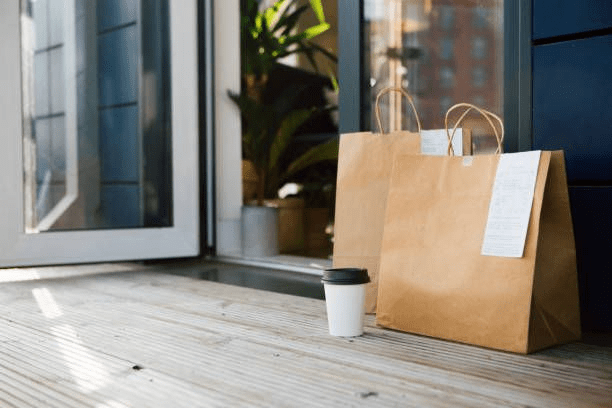
The COVID-19 pandemic drastically accelerated the demand for contactless services across the United States. Food delivery, in particular, saw exponential growth—but that boom also exposed structural weaknesses:
- Rising labor costs
- Limited delivery capacity per hour
- Delivery errors and inefficiencies
- Customer dissatisfaction due to delays
To solve these challenges, one solution rose to the forefront: autonomous delivery robots.
📊 According to Fortune Business Insights, the global market for autonomous delivery robots was valued at $400 million in 2024, with projections to surpass $4 billion by 2032, reflecting a staggering 33% CAGR.
This isn’t a passing trend—it’s a structural shift in how we move goods within cities.
Coco Robotics: The Urban Delivery Pioneer

Founded in 2020 by engineering graduates from UCLA, Coco Robotics has already completed over 500,000 successful deliveries across U.S. cities. What sets Coco apart isn’t just its tech—it’s the company’s practical, city-first strategy.
Tech Architecture: Hybrid Navigation at Its Core
Unlike many competitors that aim for full autonomy, Coco takes a more realistic and safety-first approach, particularly tailored to dense urban environments:
- Robots operate autonomously under normal conditions
- In complex scenarios (intersections, crowds, obstacles), remote human operators can intervene in real time
- The system relies on cameras, GPS, and AI-driven sensors
This hybrid model (semi-autonomous + remote control) allows Coco to deploy in cities much faster, with fewer regulatory hurdles and a greater degree of public trust.
From LA to the World: Coco’s Smart Expansion Strategy
Coco began operations in select areas of Los Angeles, but due to its scalable tech and thoughtful city partnerships, it has expanded into Chicago, Miami, and even internationally to Helsinki, Finland.
🤝 Public-Private Partnerships
Coco doesn’t just drop robots into new cities—it works collaboratively with local governments:
- Safety protocols for pedestrians
- Defined robot operating hours
- Crossing regulations and sidewalk sharing
- Data transparency and regulatory feedback loops
This collaborative model has made cities more open to Coco’s services and has accelerated deployment timelines.
Why Restaurants Prefer Coco Over Traditional Platforms
Delivery apps like DoorDash and Uber Eats charge restaurants 20–30% commission, which is especially painful for small businesses. Coco offers a game-changing alternative.
Coco’s Distinct Revenue Model
- Flat per-order fee (predictable and affordable)
- No tipping required
- No delivery workforce shortages during peak hours
- Real-time tracking for customers
- Lower failure rates and higher satisfaction
Restaurants save money, customers enjoy better service, and local delivery becomes more sustainable.
Coco Robotics Company Analysis Report

1. 🏢 Business Overview
Founding Year & Headquarters
- Founded in 2020, headquartered in Santa Monica, California, USA.
Founders & Key People

- Co-founder & CEO: Zach Rash
- Co-founder: Brad Squicciarini
Industry & Services
- Operates autonomous sidewalk delivery robots for last-mile logistics.
- Focus on food, grocery, and retail delivery within urban areas.
Key Milestones
- Surpassed 1 million miles of autonomous travel.
- Produced ~1,000 robots and collaborated with 1,000 business partners.
- Completed over 500,000 zero-emission deliveries.
Revenue Model
- B2B contracts with platforms like DoorDash and Uber Eats.
- Per-delivery fee structure based on unit economics.
- Additional revenue streams from advertising, platform licensing, and partnerships.
Target Customer Segment
- Primarily B2B (delivery platforms, retailers, restaurants).
- Expansion potential into public and municipal partnerships.
2. Industry & Market Analysis

Market Size & Growth Forecast
- Global autonomous delivery robot market expected to reach $3.9B–$8.6B by 2029.
Estimated CAGR
- Industry CAGR projected at 20–30% based on multiple research sources.
Key Trends
- Rising demand for automation and contactless delivery.
- Eco-friendly logistics favored by policy makers.
- Rising labor costs fueling robotic delivery interest.
Porter’s 5 Forces
- Threat of New Entrants: High, given low capital barriers for prototypes.
- Bargaining Power of Suppliers: Moderate to high due to AI/robotic components.
- Threat of Substitutes: Medium (vehicles, drones, bikes).
- Bargaining Power of Buyers: Moderate, often mediated by B2B contracts.
- Competitive Rivalry: High due to players like Starship, Nuro, Serve Robotics.
3. Financial Analysis (Estimated)
| Metric | Details |
|---|---|
| Total Funding | $137M–$144M (Series A & B combined) |
| Revenue Estimate | $2.5M–$5M (based on 500K deliveries, $5–$10 each) |
| Profitability | Profitable per unit economics; EBITDA-positive outlook |
| Growth Potential | Doubling delivery volume YoY from 2020–2025 |
| Capital Structure | Equity-financed, no public debt disclosed |
| Cash Flow Strategy | Reinvesting Series B capital in tech and expansion |
4. SWOT Analysis
Strengths
- Proven AI-powered unit economics
- Extensive delivery track record
- High-profile platform integrations
Weaknesses
- Reliant on venture funding
- Geographically limited by sidewalk model
- Sensitive to regulatory and environmental conditions
Opportunities
- Expanding autonomous delivery market
- Sustainability-focused urban logistics policies
- OpenAI & tech partnerships
- Global expansion potential
Threats
- Competition from heavily-funded peers
- Policy/regulatory risks
- Security, vandalism concerns
5. Strategic Summary & 10-Year Outlook
Current Position
Coco Robotics leads the sidewalk delivery robot segment with AI-optimized operations and proven traction.
Strategic Recommendations
- Expand into more cities and international markets.
- Strengthen regulatory compliance and urban partnerships.
- Diversify offerings (e.g., data analytics, in-robot ads).
10-Year Projection
- 2025–2026: Scale fleet to over 10,000 robots.
- 2027–2030: Enter major global urban markets.
- 2030–2035: Integrate with smart city infrastructure and explore new revenue models.
Further Actions
- Prepare investor deck based on this analysis.
- Compare with competitors like Nuro, Starship, and Serve.
- Monitor policy developments in target expansion cities.
Competitive Landscape: Serve Robotics vs. Starship vs. Coco
The U.S. delivery robot market is heating up, with multiple startups competing for dominance.
Competitors:
Serve Robotics
- Partnered with Uber Eats
- Focused on full autonomy
- Operating in cities like LA and San Francisco
Starship Technologies
- Focused on university campuses and gated communities
- Over 8 million deliveries completed
- Highly successful in semi-private environments
Coco’s Edge:
While Serve and Starship chase full autonomy, Coco’s hybrid model offers immediate practicality in public urban settings. It adapts better to real-world complexity, secures regulatory approval more easily, and scales faster.
Challenges Ahead: The Roadblocks of Robot Delivery
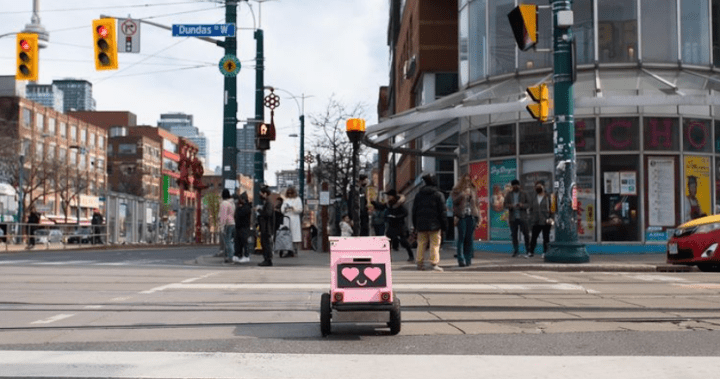
Of course, no system is perfect—Coco and its peers face several hurdles:
Physical Limitations
- Struggles with stairs, construction zones, and steep inclines
- Vulnerability in extreme weather (snow, heavy rain, heatwaves)
- Occasional congestion on sidewalks with pedestrians
Technical and Social Concerns
- Connectivity issues can disrupt remote control
- Vandalism and theft of robots are increasing
- Some pedestrians feel uneasy sharing space with machines
Coco continues to address these issues through UX upgrades, anti-tamper features, and city-specific service adaptations.
Looking Ahead: Delivery Robots Beyond Food
Coco is already exploring expansion beyond food to pharmaceuticals, convenience goods, and short-range parcel logistics. Here’s what’s coming:
Future Use Cases
- Prescription delivery
- Local e-commerce (1–3 km range)
- Subscription grocery delivery
- Middle-mile urban logistics
With further advances in AI, routing algorithms, and fleet coordination, robots will soon handle more than just lunch orders—they’ll be part of the city’s delivery backbone.
Lessons for World Robotics Startups
Coco’s success isn’t just about tech. It’s about the intersection of innovation, regulation, and urban integration. Any startups looking to scale globally can learn from Coco’s blueprint:
📌 Key Takeaways:
- Choose practical tech (hybrid autonomy works!)
- Design for local laws and pedestrian culture
- Build trust with users through strong customer experience
- Partner with small businesses, not just big chains
- Prioritize fast maintenance and support infrastructure
To compete in this emerging space, startups need more than AI—they need human-centered thinking and city-level collaboration.
Delivery Robots Are No Longer a Gimmick

The cute little robot you see rolling down the streets of LA? It’s not a prototype. It’s not a gimmick. It’s the future of last-mile logistics.
Coco Robotics is showing us that the question is no longer “Will this work?” but rather:
“How can we make it work even better?”





 Boss Brief
Leave a comment