
       Lately, I kept seeing this strange-looking plush toy pop up on my feed.
At first glance, it looked like a mix between a bunny and a mischievous little monster — with huge eyes, long ears, and pointy little teeth.
Honestly, I wasn’t sure if I found it cute or creepy. But the more I saw it, the more intrigued I became.
So I did what anyone would do — I looked it up.
That’s when I discovered its name: Labubu.
Turns out, this oddly charming figure isn’t just some random toy — it’s a global sensation right now, with fans and collectors scrambling to get their hands on it.
I couldn’t help but dive into the world of Labubu to find out what all the hype was about.
Today, I’ll share everything I found — from who created Labubu, to why it’s so popular, and even the controversies that come with its fame.
Spoiler alert: it’s way more than just a cute collectible.
The Hottest Collectible Right Now
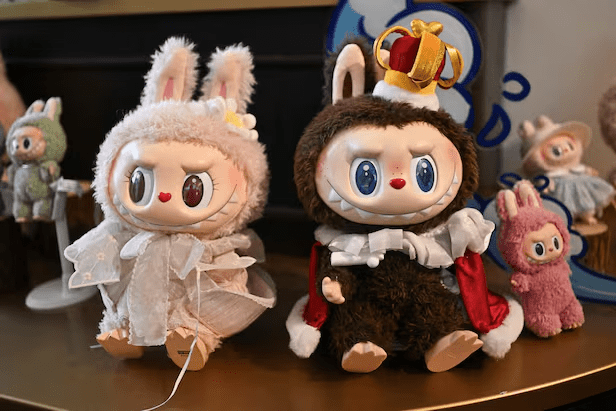
If there’s one figurine heating up social media and taking the collectible world by storm, it’s Labubu.
With its bunny-like appearance, oversized eyes, and quirky little teeth, this one-of-a-kind character is gaining global popularity — not just in Asia, but across the world.
More than just a cute toy, Labubu has become a culture icon for the MZ generation. With its emotional appeal, collector’s value, rarity, and massive celebrity exposure, it’s now seen as a must-have art toy.
Today, I’ll dive deep into the origin of the Labubu phenomenon, what’s driving its global success, and the darker side of its explosive popularity.
Who Created Labubu?

Labubu is the brainchild of Kasing Lung, an illustrator from Hong Kong.
He gained international recognition in 2011 by winning first place at a Belgian illustration contest — the first Chinese artist to do so. After that, he partnered with Hong Kong art toy brand HOW2WORK and began producing storybooks and figures based on his imaginary world.
Inspired by Northern European mythology, Kasing Lung created a whimsical universe filled with fairies and monsters. Among them, the most beloved character turned out to be none other than Labubu — a mischievous yet warm-hearted creature who, despite its cheeky smile, wants to help others.
That playful personality and slightly “offbeat” appearance are exactly what draws people in.
POP MART & The Genius of the Blind Box Model

In 2019, Kasing Lung signed a licensing deal with Chinese toy brand POP MART, officially launching Labubu into the mass market.
Since then, the figurine has appeared in a variety of series — from Highlight, Macaron, to Let’s Play — with over 300 different versions released.
One of the key factors behind Labubu’s popularity is its “blind box” model.
Because buyers don’t know which version they’ll get, it taps into their anticipation and desire to collect the full set.
Rare versions, like the “Secret Editions” (with a probability of just 1.39%), have driven up resale prices significantly.
In June 2025, resale platform CREAM reported that Labubu’s transaction volume increased 121% month-on-month, and a staggering 7711% year-on-year.
One special edition that originally retailed for around ₩128,000 (~$100) was being resold for as much as ₩1.3 million (~$1,000).
Celebrity Power: Labubu Goes Viral
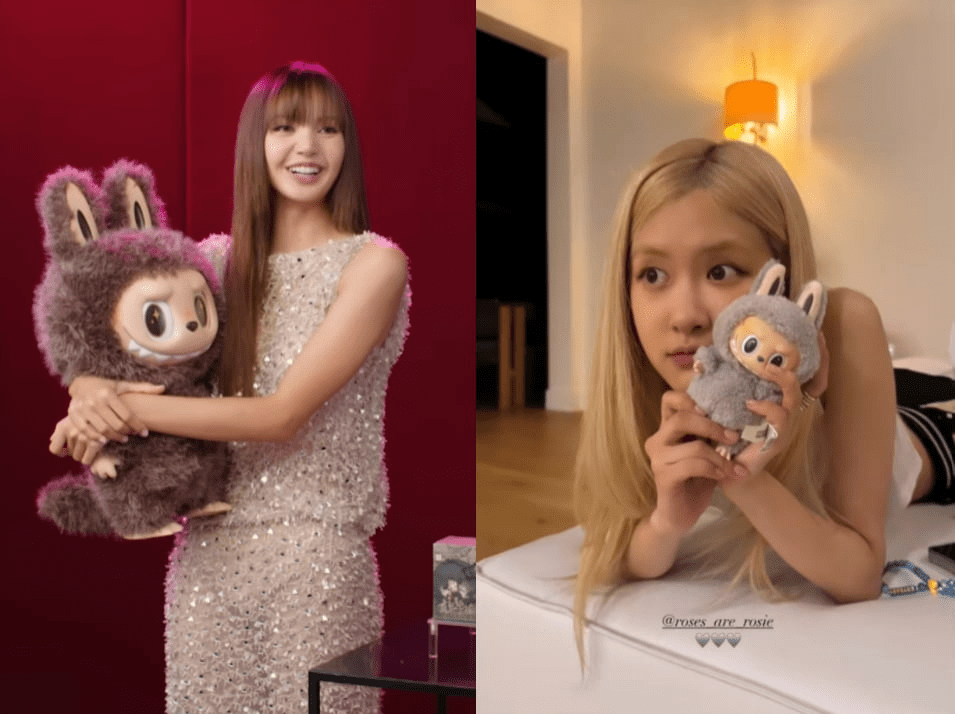
Labubu’s rise to fame has also been fueled by global celebrities.
BLACKPINK’s Lisa is a self-declared Labubu fan, frequently featuring the character on her social media and even introducing it during a Vanity Fair interview.
Following her lead, international stars like Rihanna, Kim Kardashian, and Dua Lipa have incorporated Labubu into their style and content, further boosting its viral appeal.
In Korea, popular singer Lee Young-ji — often dubbed the “President of the MZ generation” — made headlines when she unboxed a Labubu figure on her social media, only to find out later it was a counterfeit (“Fake Labubu”).
The moment even got covered by TVBS, a major Taiwanese news outlet, proving just how powerful Labubu’s influence has become.
The Dark Side of the Labubu Craze

With soaring demand comes a fair share of problems.
Across major cities like the U.S., U.K., and South Korea, POP MART stores have seen overnight lines, crowd surges, and safety concerns — some severe enough that POP MART Korea suspended all offline sales of Labubu.
Fake products are also flooding the market.
Buyers now look for quality of box print, QR codes, and even official POP MART verification pages to confirm authenticity.
Some resellers treat Labubu as an investment asset, buying in bulk and selling at inflated prices.
In China, Labubu has earned the nickname “Plastic Maotai”, referencing the country’s ultra-luxury liquor brand.
It’s both a compliment to its status and a jab at the hype culture — suggesting Labubu has become a symbol of social prestige and speculative consumerism.
Labubu Is More Than Just a Toy

Labubu is no ordinary plush toy.
It represents a perfect fusion of art toys, emotional storytelling, collectible culture, and fan-driven creativity.
For many in the MZ generation, it symbolizes ownership, individuality, and imaginative play — all wrapped up in one figure.
But with such intense demand, we also need to talk about ethical consumption, fake product awareness, and the pitfalls of speculative trends.
Labubu is burning bright right now — but whether it remains a lasting cultural icon or a fleeting trend depends entirely on how we, the consumers, choose to embrace it.


 Boss Brief
Leave a comment