
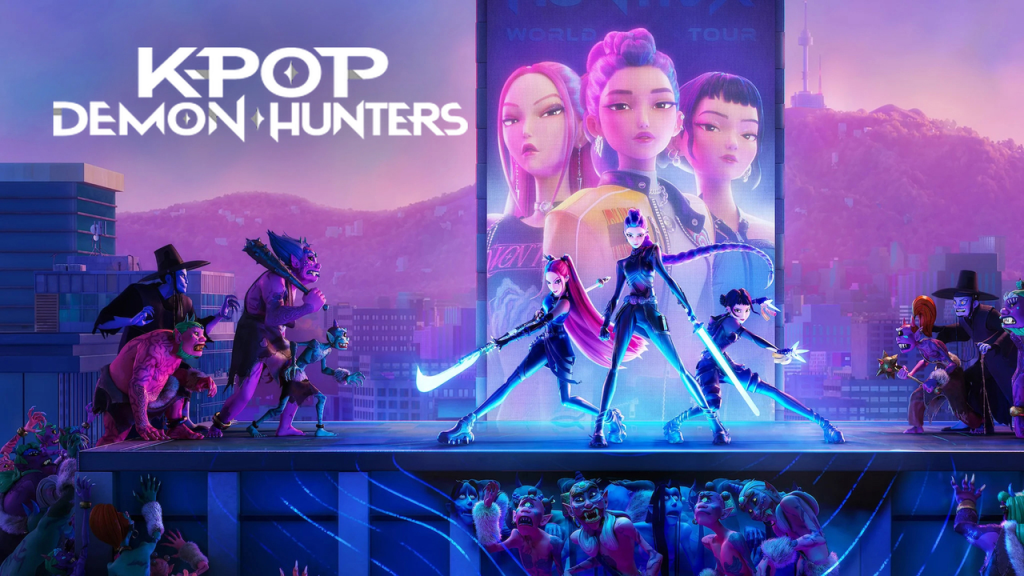
                 These days, it feels like I can’t go anywhere without hearing the song “Golden.”
At first, I thought it was just another catchy K-pop track—but it kept playing everywhere. And then I started noticing something else: whenever people talked about what they were watching on Netflix, one title kept coming up—K-Pop Demon Hunters.
Friends were asking, “Have you seen it yet?”
My favorite YouTubers were suddenly dressing up as the characters and doing cosplay-themed livestreams.
Instagram Reels and TikTok were filled with people dancing to “Golden” or recreating scenes from the film.
At some point, I had to ask myself:
“What is going on here? What is this thing—and why is it everywhere?”
Out of curiosity, I started watching the movie little by little whenever I had free time.
And I’ll be honest:
Even as an adult, I found it incredibly entertaining.
The storytelling was immersive, the characters were well-developed, and the music—wow.
“Golden” isn’t just a fictional soundtrack — it’s a legitimately powerful song that rivals real-life K-pop hits.
The entire production felt like it had been crafted with deep care and creative vision.
It didn’t feel like just an animation. It felt like the start of something new — something bigger.
Watching this, I realized something important:
Korean pop culture is no longer something to be underestimated or overlooked.
It’s evolving. It’s bold. It’s setting global trends, and K-Pop Demon Hunters is a shining example of that.
So I wanted to write this.
Not just to talk about why the movie is popular,
but to explore how it became such a massive cultural wave,
and what it tells us about the direction global entertainment is heading.
Netflix’s KPop Demon Hunters
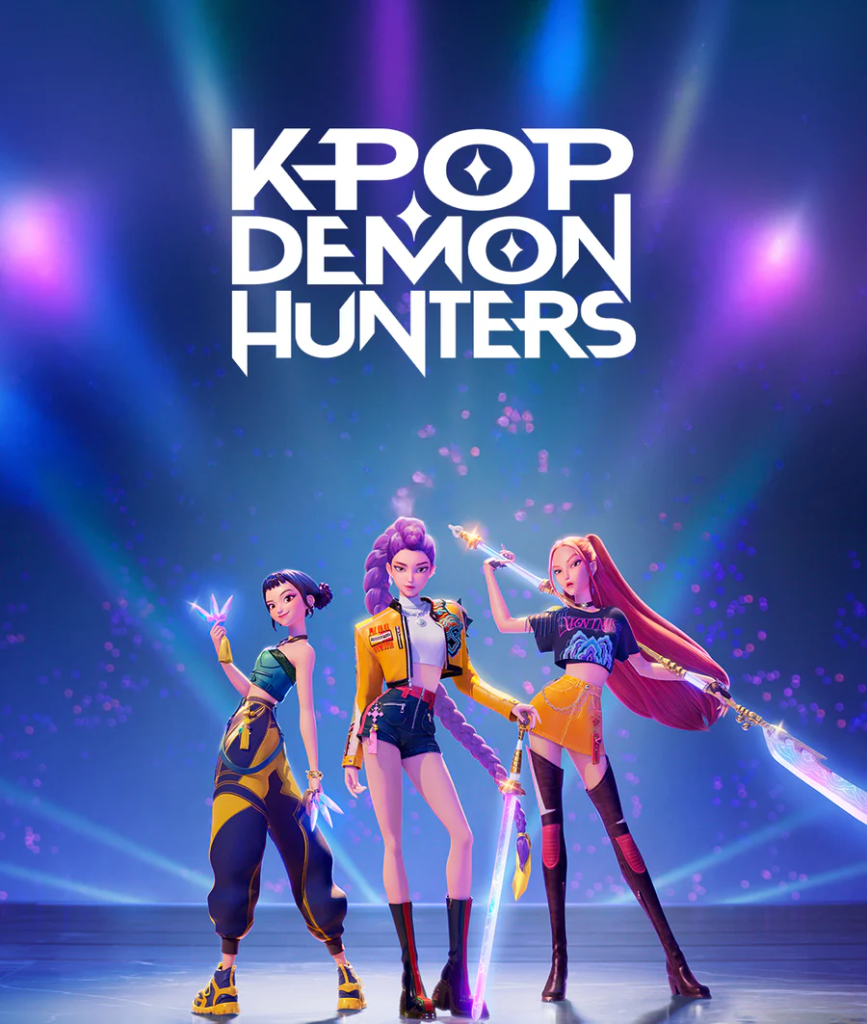
If you’ve been on Netflix or social media lately, chances are you’ve heard about the unexpected global sensation:
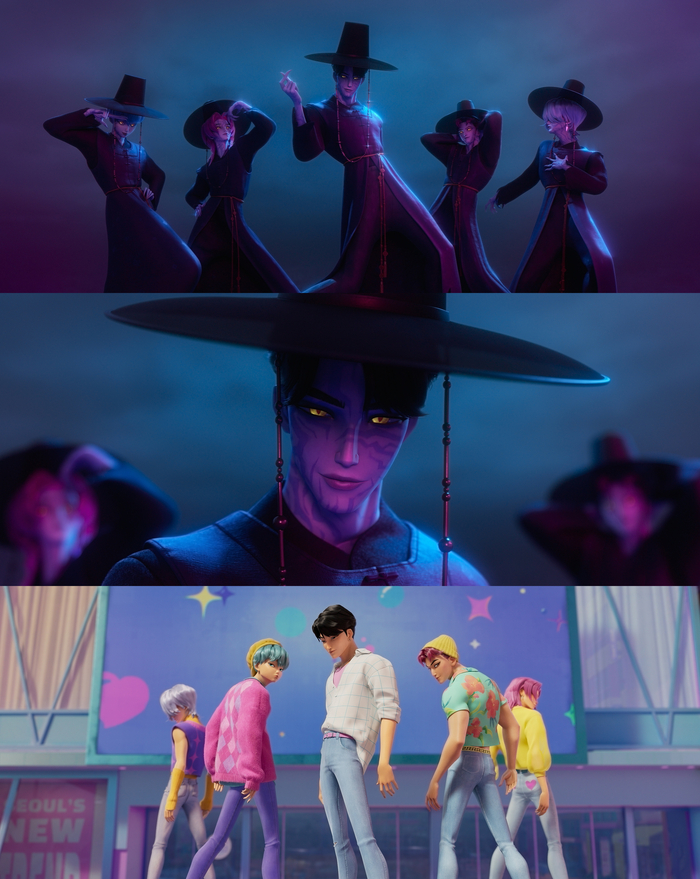
KPop Demon Hunters — an animated film blending K-pop, fantasy action, and supernatural storytelling.
Five weeks after its release, Netflix officially confirmed that the movie had reached a new all-time high in viewership, making it the first movie in Netflix history to peak after its initial release week. That’s a highly unusual growth pattern — and one that reveals just how powerful its unique formula is.
Let’s break down how KPop Demon Hunters became a cross-cultural juggernaut — and why the world can’t stop watching.
What Is K-Pop Demon Hunters?

A fictional K-pop girl group by day, demon-slaying warriors by night.
That’s the simple (but highly effective) premise of K-Pop Demon Hunters, which combines high-energy performance scenes with rich character arcs, supernatural elements, and stylish action.
The lead character Rumi, voiced by actress Arden Cho, has been widely praised for her depth — balancing fierce leadership with personal vulnerability. Set in a hyper-stylized version of Seoul, the film draws visual inspiration from both K-pop aesthetics and anime storytelling.
Co-produced by Netflix Animation and a Korean-Japanese-American creative team, it represents a true fusion of East Asian pop culture and Western animation style.
‘Golden’: The Fictional K-pop Song That Took Over Real Charts

Let’s set the record straight:
While some fans initially mentioned other titles, the breakout hit from KPop Demon Hunters is “Golden.”
And it’s not just a fictional success — it’s dominating real global charts.
Fact-Checked Highlights:
- #1 on Netflix’s Global OST Chart for five consecutive weeks (June–July 2025)
- Peaked at #3 on Spotify Global Top 50
- 100M+ YouTube views within three weeks of release
- Massive TikTok trend with over 500M views under #GoldenDanceChallenge
- Even real K-pop idols have posted covers and reactions
This created a reverse marketing loop:
🎧 “Who’s this group singing Golden?”
📽️ “Wait… they’re fictional?”
🍿 “I need to watch this movie!”
It’s the first time in Netflix history where a song brought new audiences to the film, rather than the other way around.
An Unprecedented Streaming Curve
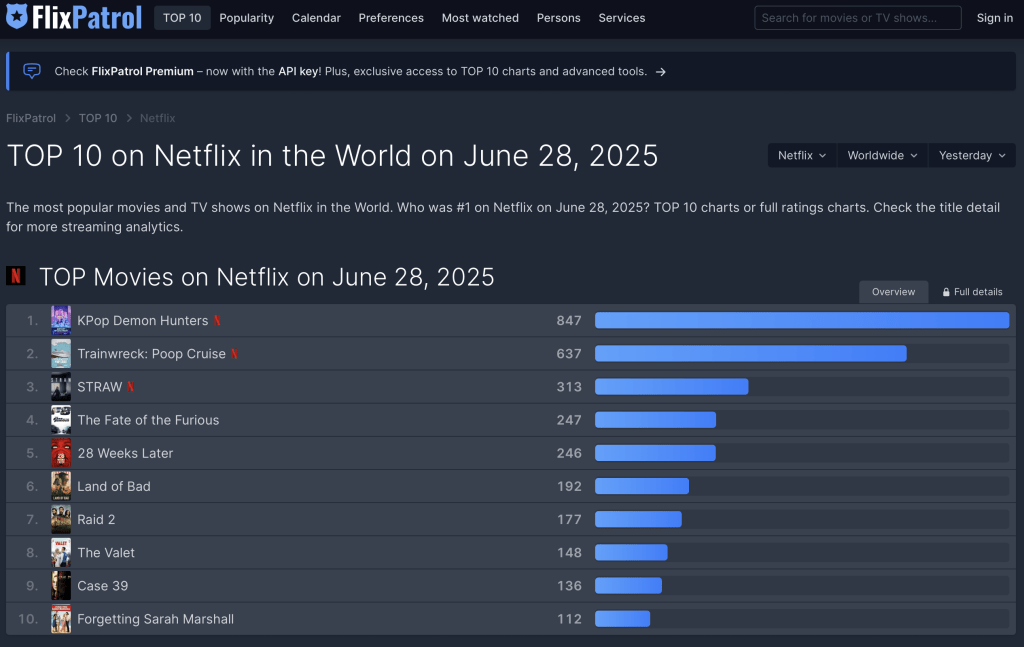
According to Netflix’s analytics team,
KPop Demon Hunters hit its viewership peak in Week 5, not Week 1 — something no other Netflix film has ever done.
Where most titles spike in the first weekend and decline quickly, K-Pop Demon Hunters steadily climbed, often dropping to #2 or #3 before reclaiming the #1 spot repeatedly.
Why? Because this isn’t just a film — it’s rewatchable like a visual album.
Fans stream it again and again for the music, the animation, the vibes — and to participate in a growing online community.
Fandom Creativity Has Taken Over
The global fanbase for KPop Demon Hunters has turned the movie into a cultural sandbox:
✨ Real Fandom Responses:
- Fanart across Pinterest, DeviantArt, and Twitter
- Thousands of fanfics expanding the lore on Tumblr and AO3
- Real-time fan subtitles in 10+ languages
- Massive cosplay response at anime conventions
- A viral petition: “Make Rumi a Real Idol” with 600K+ signatures
The fictional group now has more content than some real ones, including:
- Custom lightsticks
- Dance practice recreations
- Fan-made Spotify playlists for each member
Celebrity Endorsements Amplify the Fire
A key part of the viral spread has been organic celebrity support, including:
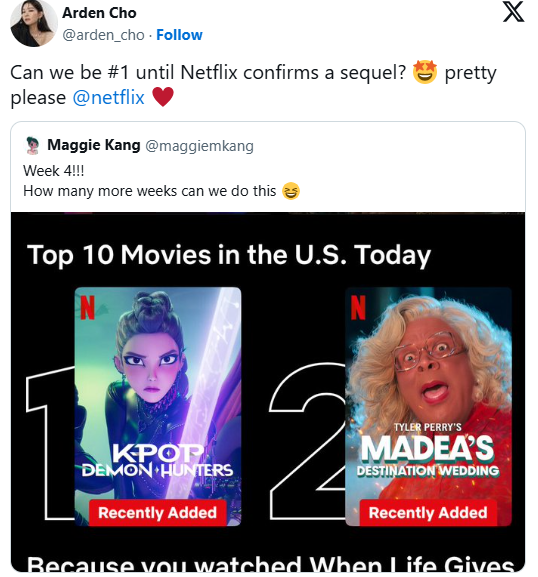
- Arden Cho (voice of Rumi) tweeting updates daily, including “Can we stay #1 until Netflix gives us a sequel?”
- Among the rising wave of ‘Golden’ dance covers, K-pop girl band QWER stood out by sharing their own version, fueling the trend even further on platforms like TikTok and Instagram.
- While there have been no official celebrity reactions yet, KPop Demon Hunters has generated the kind of buzz typically associated with viral moments involving stars like Lizzo and Doja Cat.
- YouTubers calling it “the best animated film of 2025”
Without paid marketing, this word-of-mouth blitz has become a masterclass in fandom-led promotion.
Why K-Pop Demon Hunters Matters
Culturally:
- It combines Korean music and cultures, Japanese animation influences, and Western storytelling
- Themes include identity, fame, sisterhood, and sacrifice — resonating strongly with Gen Z
- Proves that fictional music acts can rival real ones in emotional impact
Strategically:
- Flipped the traditional model: music drives movie viewership
- Potential to expand into:
- Anime-style sequel series
- Live-action spin-offs
- Mobile rhythm games
- Merch and concert events
- In many ways, K-Pop Demon Hunters feels less like a standalone film and more like the launchpad for a transmedia IP empire.
What’s Next?
It’s already being called Netflix’s first “K-pop cinematic universe”, and a follow-up is almost inevitable.
Though no sequel has been officially greenlit (as of July 23, 2025), Arden Cho’s tweets and insider reports suggest:
- Seasonal specials are in development
- A prequel series might explore how Rumi formed the group
- Rumors of a live-action adaptation are gaining traction
Will Netflix try to turn K-Pop Demon Hunters into its own MCU-sized franchise?
It certainly seems possible.
A New Era of Fictional Fandom
KPop Demon Hunters proves that:
- Fictional bands can dominate real charts
- Animated heroines can inspire cosplay, tears, and standing ovations
- Cultural storytelling is strongest when it’s bold, weird, and global
🎧 If you haven’t watched it yet, don’t wait.
📀 If you’ve already streamed it… you’ve probably streamed it again.
Netflix didn’t just release an animated movie.
They launched a movement.


 Boss Brief
Leave a comment