

According to Google Trends, curiosity about “what the future will look like” has nearly doubled since 2020. This surge in interest has filled our cultural landscape with endless visions of tomorrow. Everywhere we look, people are pitching extreme futures—some terrifying, others dazzling, but almost always at the edges of possibility.
Corporate strategists in fleece jackets sell grand narratives with bulletproof confidence. Their charts, drawn with dotted lines projecting upward, are presented as if they’re already solid fact. Entertainment media swings between utopian heroes and dystopian nightmares. And religious voices echo the familiar promises of salvation or threats of doom.
All of these perspectives make the future seem like a stage for spectacle. But the reality is much quieter. The future doesn’t slam into us all at once. It seeps into our lives until it feels almost invisible. The extraordinary, over time, simply becomes ordinary.
Why Ordinary Matters More Than We Think

Take a look at daily life today. Your smartwatch can track your pulse while you sleep and call emergency services if you collapse. Something that once cost millions of dollars at Bell Labs is now a cheap gadget in a convenience store. A robot vacuum hums across your neighbor’s floor. The Pope uses Instagram. Same-sex marriage is legal in nearly 40 countries.
Each of these shifts would have shocked previous generations. And yet, for us, they barely register. They feel unremarkable, almost boring. Why? Because humans adapt so quickly that yesterday’s miracle is today’s routine.
I grew up in the damp, post-industrial Midlands, surrounded not by bold visions of tomorrow but by stories of everyday survival: saving all year for a week at the beach, Friday night pints, Saturday hangovers, greasy Sunday breakfasts, flooded basements, and awkward bus trips. Ordinary life shaped me far more than any prediction about flying cars or robot overlords.
So when we imagine the future, why do we erase these human details? Why do we talk about AI, climate collapse, or space colonies without mentioning tacos, laundry, or broken tires? Those are the spaces where the future will actually show up.
The Slow Drip of Change

Real change doesn’t arrive like a cinematic explosion. It arrives slowly, quietly, in the background. You’ll see it in tax forms, in Costco aisles, in the fine print of toothpaste packaging.
Yes, AI will transform how we work, climate change will reshape how we live, and robotics will shift our economies. But the deeper question is this: How will these forces feel when they become part of daily routines? What does climate adaptation look like not in theory, but on a Tuesday morning when you’re rushing to get your kids to school?
That is the level of detail we often miss when we chase dramatic extremes.
Our Superpower: Adaptation

Humans are remarkably good at folding disruption into ordinary life. We panic, we resist, and then we adapt—so completely that the new reality soon feels natural.
Think of smartphones. Barely 15 years ago, the idea of carrying the internet in your pocket was astonishing. Today, we complain when Wi-Fi is slow or when a phone’s camera isn’t sharp enough. The extraordinary has become invisible.
This ability to normalize change is our greatest strength. It is why we survive. And it is why the future, however radical, will mostly feel like… life.
Why This Perspective Matters
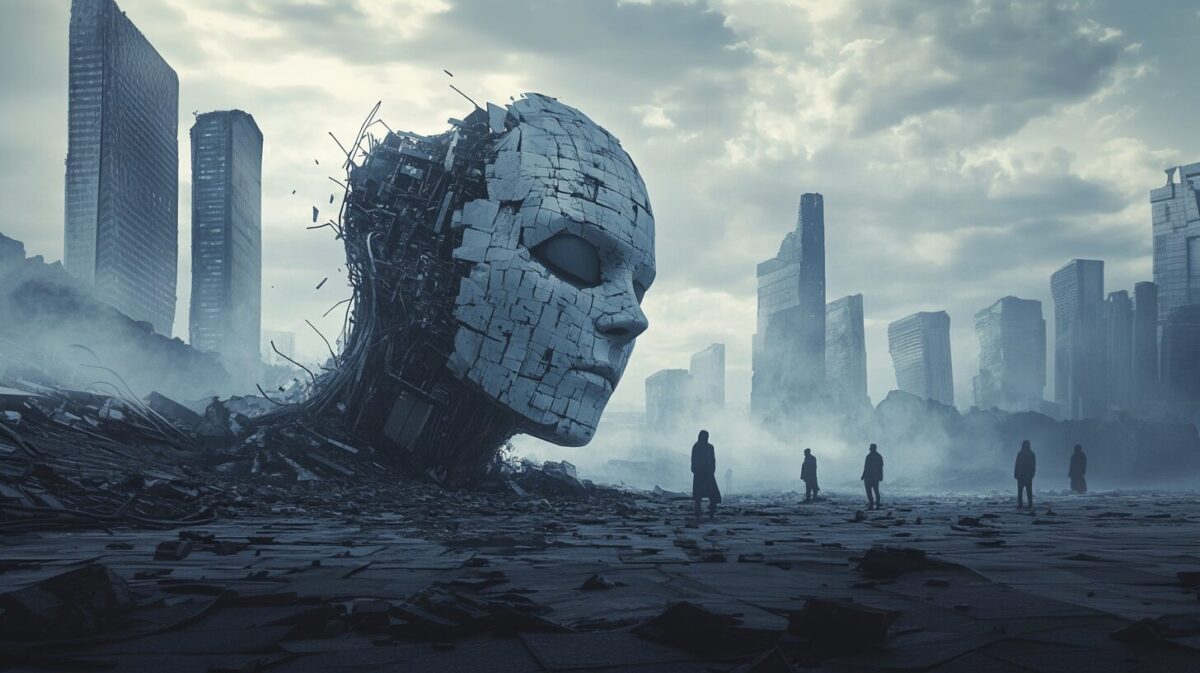
As a writer, I’ve seen how people engage more thoughtfully when the future is framed as ordinary experience rather than extreme fantasy. Talk about AI as a dystopian overlord, and people either tune out or panic. Talk about AI as something that might change how your grandmother books a doctor’s appointment, and suddenly the conversation is real.
Grand visions and dire warnings are necessary, yes. But if that’s all we offer, the future remains abstract—something that happens to other people. And when the future feels distant, people disengage. That disengagement, that sense of “it has nothing to do with me,” could become our generation’s greatest failure.
Final Thoughts
The future is not just for scientists, CEOs, or sci-fi filmmakers. It belongs to all of us—business leaders, commuters, parents, friends at a bar. And the stories we tell each other about what’s coming will shape how ready we are to adapt.
So let’s keep imagining bold possibilities. But let’s also remember the tacos, the messy kitchens, the broken washing machines, the awkward dates, the neighborhood gossip. Because those are the things that will ground extraordinary changes in ordinary life.
The future will not only be about AI, robots, or climate shocks. It will also be about how those forces blend into Friday nights, Saturday hangovers, and greasy Sunday breakfasts.
In other words, the future will be ordinary—and that is exactly why it will matter most.


 Boss Brief
Leave a comment