
In September 2025, New York Times columnist David Brooks published a provocative essay: “Why You Can’t Solve Poverty by Just Giving People Money.” The piece challenged one of the central tenets of modern liberalism: the belief that income transfers—whether through welfare, subsidies, or universal cash programs—are sufficient to help the poor escape poverty.
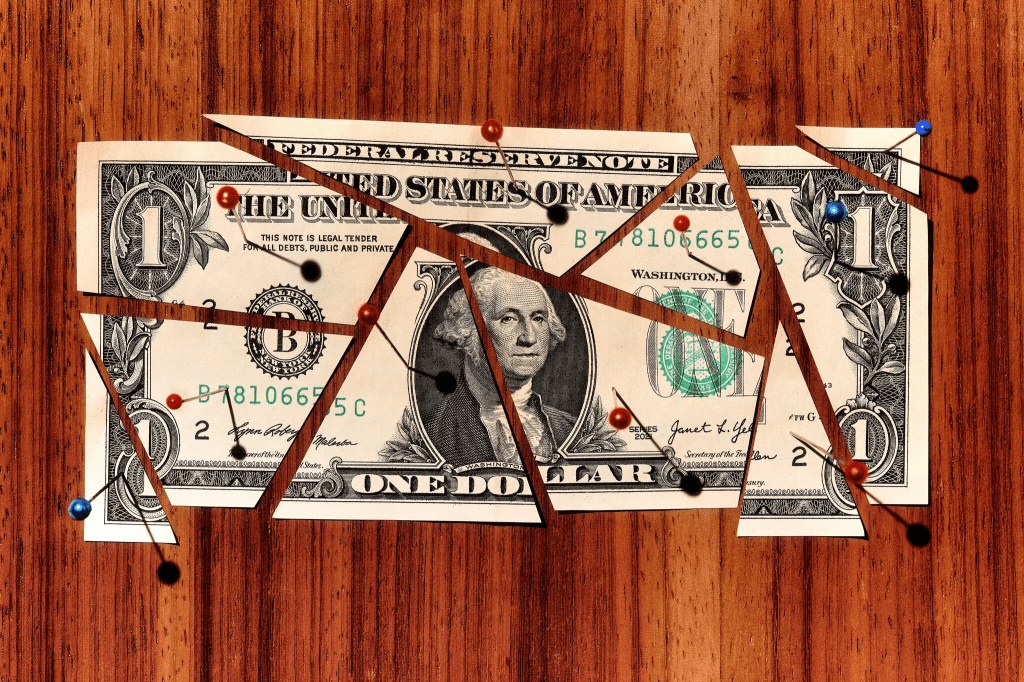
His argument wasn’t that money is useless. Quite the opposite—cash transfers do provide short-term relief, and in many cases, stability. But, Brooks argued, money alone cannot produce the human capital, values, habits, and cultural frameworks that allow people to thrive. Poverty, in his view, is as much moral, relational, and cultural as it is economic.
This argument immediately sparked a storm. Supporters praised Brooks for pointing out the limits of “materialist liberalism.” Critics accused him of downplaying the very real burdens that financial insecurity places on families. The debate reveals one of the oldest questions in social science and politics: is poverty primarily an economic condition, or is it cultural and moral at its root?
What the Research Actually Shows
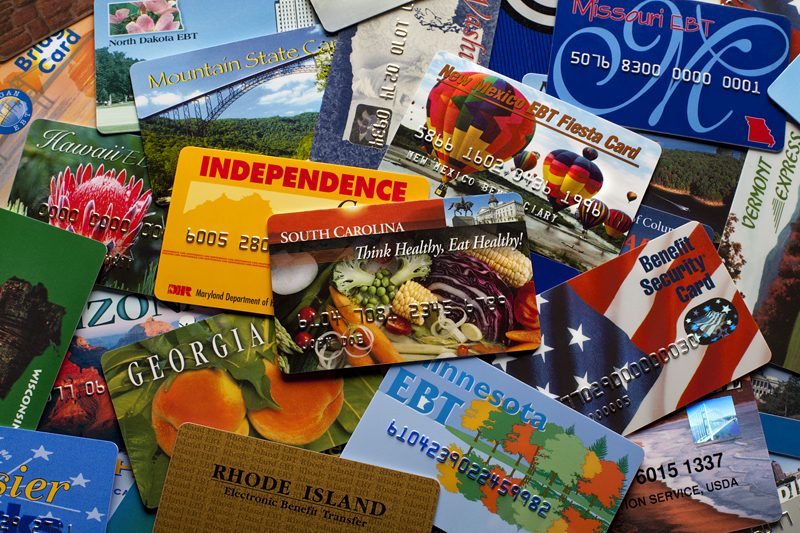
Brooks begins with data.
- In one study, low-income families with children received $333 per month. Families spent the money, but children showed no measurable improvement in language, cognition, or behavior compared to a control group.
- Another program gave $500 per month for two years. Again, there was no significant difference in adult psychological health or long-term financial stability.
- Even $1,000 per month—a near-universal basic income level—did not produce improvements in health, sleep quality, parental involvement, or educational outcomes.
If money were the silver bullet, such programs should have transformed lives. Instead, results were modest, sometimes negligible.
This echoes earlier findings. In 1997, University of Chicago sociologist Susan E. Mayer published “What Money Can’t Buy.” She initially believed more money would equal better outcomes. But her research forced her to reconsider. Doubling household income, she found, barely changed the odds of teen pregnancy or school dropout. Mayer’s conclusion was blunt:
“Once basic needs are met, additional income has less effect on children’s outcomes than the qualities of their parents.”
Qualities such as diligence, honesty, health, reliability, and trustworthiness—in other words, human capital—were far more decisive than marginal income.
The Missing Dimension: Human Capital and Culture

Here lies Brooks’ central claim: societies are adept at transferring cash, but much weaker at cultivating the intangible qualities that allow people to use money well.
When liberal thinkers reduce poverty to a purely material condition, they ignore the “software” of human life—values, norms, relationships, and communities—that determine whether financial resources translate into flourishing.
Brooks points to a paradox: America spends more on anti-poverty programs than ever before—indeed, more in real terms than the nation’s entire GDP in 1969. Yet deep poverty remains stubbornly persistent. Why? Because cash transfers stabilize the poor but do little to help them become self-sufficient.
Liberal Materialism vs. Conservative Culturalism
Brooks identifies this as a philosophical divide.
- Liberalism (in its American form) has long assumed that material conditions drive history. Fix the economic base, and the social superstructure will follow. This echoes Marx’s materialist framework—even among non-Marxists.
- Conservatism, by contrast, emphasizes culture, morality, religion, family, and community. Edmund Burke, Fyodor Dostoyevsky, and Samuel Johnson all wrote about the power of moral traditions to shape social outcomes.
To conservatives, it is no surprise that money alone cannot solve poverty. A society without virtue, trust, and communal solidarity will mismanage even abundant resources.
The Swedish-American Case Study
One of the most fascinating pieces of evidence comes from a study by researcher Nima Sanandaji. He discovered that Swedish Americans in the United States had a poverty rate of 6.7%. Coincidentally, Swedes living in Sweden had exactly the same poverty rate—6.7%.
The political systems were completely different. Sweden had a cradle-to-grave welfare state. The U.S. had a much thinner safety net. Yet outcomes converged, suggesting that cultural inheritance mattered more than policy design.
Culture traveled with the people, not with the government.
The Biden Administration’s “Cash Answer”

Brooks then turns to contemporary politics. The Biden administration, desperate to prevent Donald Trump’s return to the White House, invested heavily in cash-driven solutions—stimulus spending, subsidies, transfers.
Yet, politically, it failed. Why? Because populism is not fundamentally about economics. It’s about respect, dignity, identity, and belonging.
“Money can stabilize, but it cannot restore trust, heal broken communities, or provide meaning.”
Thus, Democrats misdiagnosed the problem. They tried to “buy off” discontent with subsidies. But resentment, alienation, and cultural fracture are not for sale.
Reader Responses: A Heated Debate
The NYT comment section lit up. Readers from across the world pushed back, defended, or nuanced Brooks’ argument.
- A law-enforcement officer in Normandy, France: “I work with the poorest families daily. They are hardworking but exhausted. Yes, money isn’t everything—but it brings stability, which is the foundation of everything else.”
- A mother in Baltimore, Maryland: “You clearly never worried about rent, Brooks. Try working 12 hours and then parenting with patience. Money doesn’t solve all problems, but without it, good values can’t be passed down.”
- A reader in Chicago: “Immigrant groups succeed because of cultural values around education and diligence. That shows culture matters. Money without values doesn’t work.”
- A Canadian researcher in Montreal: “Studies show cash can work up to a threshold. Homeless people given $7,500 spent it on housing, not drugs. But yes, beyond basic needs, money alone doesn’t change outcomes.”
- A professor in Princeton, New Jersey: “Poverty is relative. Without reducing inequality, poverty alleviation will remain shallow. What we need is not just cash, but a more equal society.”
Together, these comments reveal the tension between structural and cultural explanations. Everyone agrees that money matters—but whether it is sufficient is the crux of the disagreement.
A Balanced Conclusion: Both/And, Not Either/Or
What emerges is not a simplistic choice between “cash transfers” and “cultural values.” It is a recognition that both are necessary, but neither is sufficient alone.
- Cash provides stability. It prevents hunger, eviction, medical emergencies. Without it, families cannot breathe.
- Values and culture provide trajectory. They determine whether stability becomes growth—or stagnation.
Brooks’ essay, at its best, reminds us that policy cannot substitute for culture, and culture cannot substitute for policy. Real poverty alleviation requires both.
Lessons for Policy
- Design programs that cultivate human capital, not just transfer income. For example, mentoring, apprenticeships, and family support services.
- Respect culture. Communities with strong traditions of trust, responsibility, and education succeed across different political systems.
- Avoid material reductionism. Not every social ill is solved by more spending. Values matter.
- Avoid cultural fatalism. Poverty is not just about bad choices. Structural inequality is real.
- Integrate the insights. Effective anti-poverty programs will blend economic relief with cultural empowerment.
Final Reflection
David Brooks closes with a quote from the late Senator Daniel Patrick Moynihan, a Democrat with conservative leanings:
“The core truth of conservatism is that culture, not politics, determines the success of society. The core truth of progressivism is that politics can change culture and save it from itself.”
This is the paradox at the heart of modern governance. Politics cannot ignore culture, but culture cannot always heal itself without politics.
Brooks himself admits he no longer fully identifies with the right. But he also resists liberal orthodoxy. What he seeks is a synthesis: a politics generous with money but also rooted in values, community, and meaning.
The poverty debate is, in the end, not just about economics. It is about what kind of society we want to be. A society that provides enough money to live, yes—but also enough meaning, trust, and community to thrive.



 Boss Brief
Leave a comment