
The Democratic Party, once the proud home of America’s working class, is facing a crisis of identity. Billions of dollars are being poured into outreach campaigns, grassroots programs, and policy proposals designed to win back blue-collar voters. And yet, the harder the party tries, the more distant these voters seem to become.
Why has the party lost its connection with the very workers who built its foundation during the New Deal era? Why have blue-collar families, who once saw Democrats as their voice in Washington, increasingly gravitated toward Republicans — even to Donald Trump, a billionaire whose brand was built on gold-plated excess?
The answers lie not simply in economics, but in history, culture, and the deep symbolic wars over identity that have reshaped American politics for half a century.
The Hardhat Riot: A Turning Point
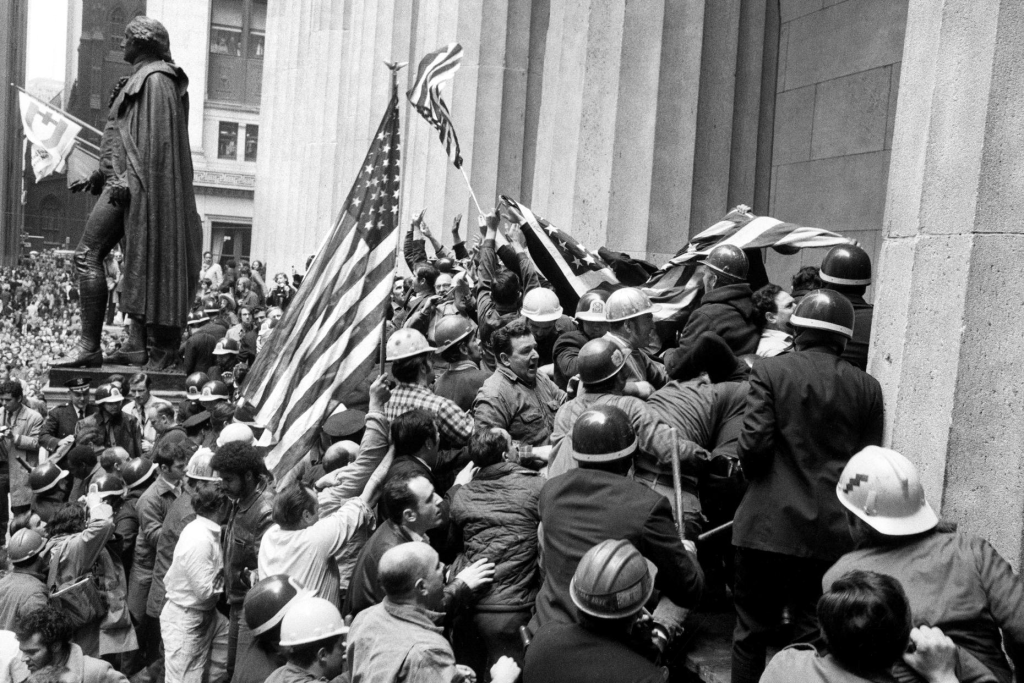
On May 8, 1970, an event unfolded in Lower Manhattan that crystallized the rupture between working-class Democrats and the new progressive elite.
At the height of the Vietnam War protests, construction workers poured off half-built skyscrapers and attacked antiwar students in what became known as the “Hardhat Riot.” For many of these workers, the protests symbolized betrayal. Their sons were dying in Vietnam, while privileged students — shielded by draft deferments — marched against the war from the safety of their campuses.
The clash wasn’t just about foreign policy. It was about respect. To blue-collar families, the antiwar left seemed to sneer at values they held sacred: patriotism, family, hard work, religion. As cultural historian Todd Gitlin would later admit, many activists of the era simply didn’t see class conflict clearly — because they themselves were the children of privilege.
For Democrats, the moment was devastating. Franklin Roosevelt’s coalition — the bedrock of Democratic strength since the 1930s — was fracturing in real time.
From Class to Identity
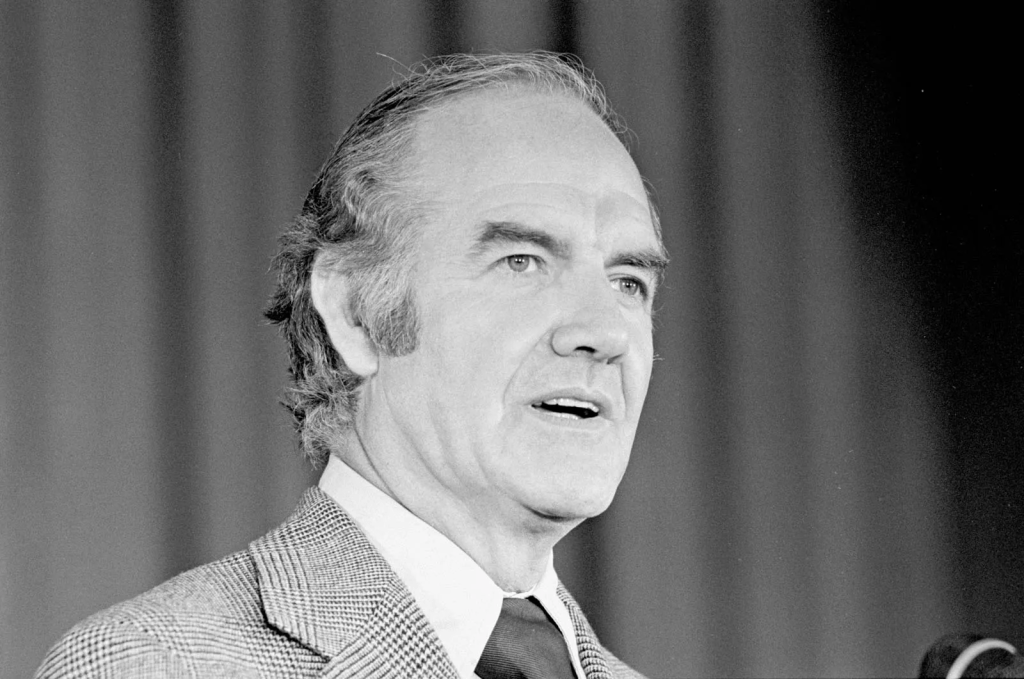
The shift became unmistakable in 1972, when George McGovern won the Democratic nomination. His campaign reflected a new order inside the party: younger, more affluent, more highly educated delegates who placed issues of race, gender, and identity above traditional class concerns.
To his passionate supporters, McGovern represented moral clarity. But to millions of working-class Democrats, he seemed out of touch. He was branded as the candidate of “acid, amnesty, and abortion.” And while his call for amnesty for draft dodgers electrified activists, most Democrats — and the vast majority of blue-collar families — opposed it.
The result was a landslide defeat. Richard Nixon carried 49 states, and his gains came disproportionately from working-class voters who had once been the backbone of the Democratic coalition. It was a turning point: for the first time, Republicans became competitive among blue-collar workers, laying the foundation for Ronald Reagan’s victories in the 1980s and Trump’s populist rise decades later.
Why Money Isn’t Enough

Fast forward to today. Democrats are once again spending heavily to try to win back working-class voters — including Hispanic men, whose recent drift toward the GOP has stunned political observers. Yet, history suggests money cannot buy cultural respect.
Research supports this. Studies of cash-transfer programs show that simply giving poor families more money rarely transforms long-term outcomes. Even when monthly stipends provided short-term relief, they did not lead to measurable improvements in children’s education, health, or cognitive development.
As sociologist Susan E. Mayer concluded in her landmark 1997 book What Money Can’t Buy, doubling a family’s income did little to prevent teen pregnancy or school dropout rates. Once basic needs are met, other factors — values, habits, community ties — matter more.
This is the essence of “human capital”: traits like diligence, honesty, reliability, and trust. Families that instill these values often thrive, regardless of income. Those that don’t remain vulnerable, no matter how much money is provided.
The Rise of Identity Politics
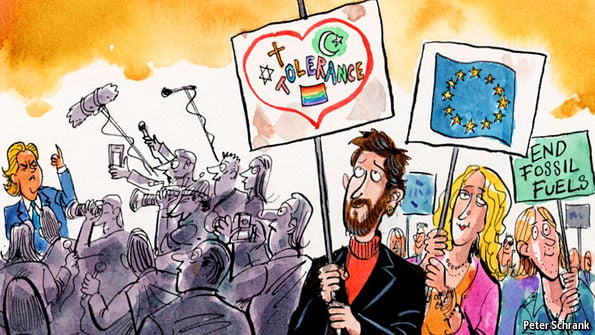
Instead of reinforcing working-class solidarity, Democrats increasingly turned to identity politics. The party focused on issues of race, gender, and sexuality while downplaying class.
This helped energize certain constituencies but alienated many others. For blue-collar workers — white, Hispanic, and Black alike — the impression grew that Democrats cared more about symbolic battles over language and diversity trainings than about safe neighborhoods, affordable groceries, or stable jobs.
Meanwhile, Republicans — from Nixon to Reagan to Trump — honed a strategy of cultural populism. They positioned themselves as defenders of “ordinary Americans” against elites who, in their telling, disdained traditional values.
For millions of voters, this rhetoric resonated more than any promise of cash transfers or welfare benefits.
The Modern Parallel
The question today is whether Hispanic voters will follow the same trajectory as white working-class voters did in the 1970s. In 2024, Trump made unprecedented gains among Hispanic men, especially those in working-class jobs. He won a majority of naturalized Hispanic citizens — a stunning achievement for a Republican candidate.
The Democratic Party had long assumed that demographic shifts — with an increasingly diverse America — would guarantee a progressive future. But Trump’s success demonstrated that identity does not equal loyalty. Culture, values, and respect matter as much as, if not more than, race or ethnicity.
Beyond Woke vs. Anti-Woke
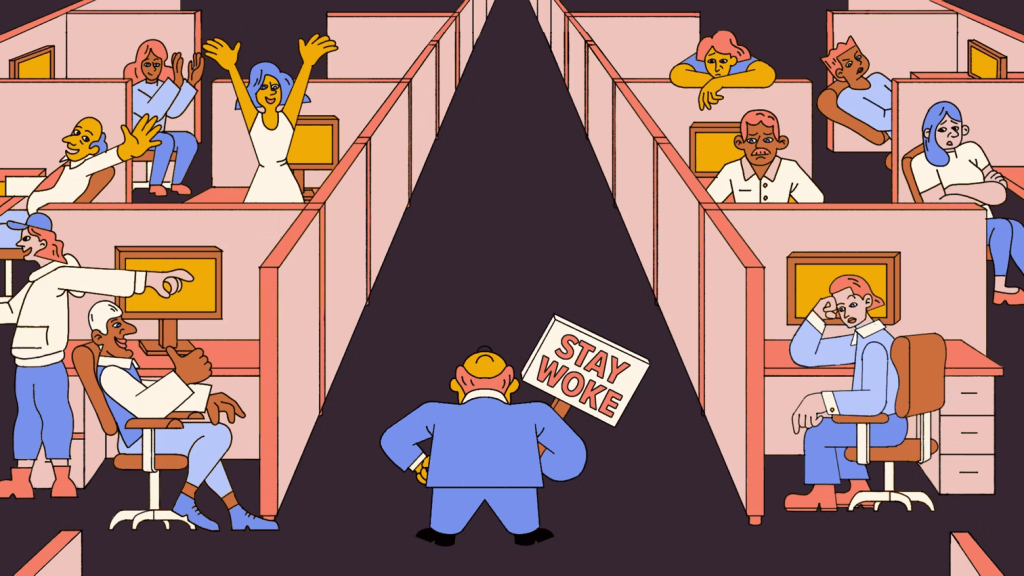
Much of today’s political debate gets framed in terms of “woke” versus “anti-woke.” But for working-class families, the real divide is more concrete: safety, dignity, respect, and the feeling of being heard.
When Democrats focus too much on elite cultural concerns, they risk repeating the mistakes of the past. JB Pritzker, governor of Illinois, recently claimed Democrats lost support because voters thought “Democrats weren’t fighting for our values.” But what if the opposite is true? What if Democrats were fighting for the wrong values — and ignoring the ones that mattered most to ordinary people?
Lessons from History
The lesson is clear: money alone cannot rebuild trust. To win back working-class voters, Democrats must restore their reputation as champions of everyday dignity. That means:
- Respect for work: Not just union jobs, but all forms of labor.
- Community values: Supporting safe neighborhoods, local schools, and stable families.
- Cultural humility: Listening more, preaching less.
- Economic fairness: Addressing cost-of-living crises without assuming cash handouts are sufficient.
This does not mean abandoning progressive ideals. It means anchoring them in the lived realities of ordinary Americans.
Final Thoughts
David Paul Kuhn’s reminder is both sobering and urgent: Democrats cannot buy back the working class. Dollars cannot substitute for dignity. Handouts cannot replace respect.
If the Democratic Party is to survive — and thrive — it must reconnect with the moral and cultural fabric of working-class America. Otherwise, the cycle will repeat: a progressive party chasing demographics while losing the very people who once formed its heart.
As history shows, when parties forget their base, others are always ready to claim it. Nixon did. Reagan did. Trump did. The question is whether Democrats are willing to learn before it happens again.



 Boss Brief
Leave a comment