

A New Wave in Wearables: Smart Glasses on the Rise. As the world transitioned to remote and contactless lifestyles during the pandemic, wearable technology has become a critical part of daily life. Among these innovations, smart glasses—devices that blend augmented reality (AR) with AI-powered intelligence—are now being hailed as the next big platform after the smartphone.

Unlike the bulky VR headsets of the past, which offered immersive but stationary experiences, new smart glasses are lightweight, stylish, and mobile. They merge digital convenience with real-world activity—whether walking down the street, exercising, or commuting.
Meta, the parent company of Facebook, is leading this transformation, turning the once-futuristic concept of “AI eyewear” into a commercial reality.
Meta’s Vision: Building the Post-Smartphone Ecosystem

Meta’s latest Ray-Ban and Oakley smart glasses aim to redefine wearables by fusing design, functionality, and connectivity. Unlike earlier models that focused primarily on voice assistants or simple notifications, these glasses are equipped with:
- AR displays for real-time information overlays
- AI integration for translation, recognition, and assistance
- Gesture control through a wristband (Neural Band)
- Seamless syncing with Instagram, WhatsApp, Messenger, and Maps
This convergence marks a critical shift: smart glasses are no longer just gadgets—they’re extensions of Meta’s ecosystem, connecting AR, AI, and social sharing into a single wearable experience.
✦ Meta Ray-Ban Display Model

The Ray-Ban Display offers a miniature high-resolution screen on the right lens that allows users to check messages, navigate maps, translate text, or play music without touching a phone. Using Meta’s Neural Band, users can control functions through subtle hand gestures.
Battery life averages 6 hours per mixed use, extended by a charging case—an important improvement for daily usability.
By aligning hardware with Meta’s broader AI and metaverse strategy, the Ray-Ban Display serves as a bridge between digital identity and the physical world.
Market Outlook: Explosive Growth on the Horizon
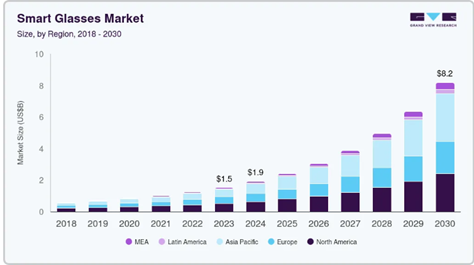
The global smart glass market is surging faster than expected.
According to Business Wire and Grand View Research:
- 2025: 5.1 million units expected to ship globally
- 2026: Shipments projected to surpass 10 million units
- 2030: CAGR forecasted at 47%, reaching US$8.26 billion, up from US$1.93 billion in 2024
In the U.S., sales are already skyrocketing. EssilorLuxottica—the manufacturer behind Ray-Ban—reported a threefold increase in smart glass revenue in the first half of 2025.
This data underscores that smart glasses are moving beyond novelty, becoming a viable mass-market product category.
Meta’s Dual Strategy: Lifestyle + Utility
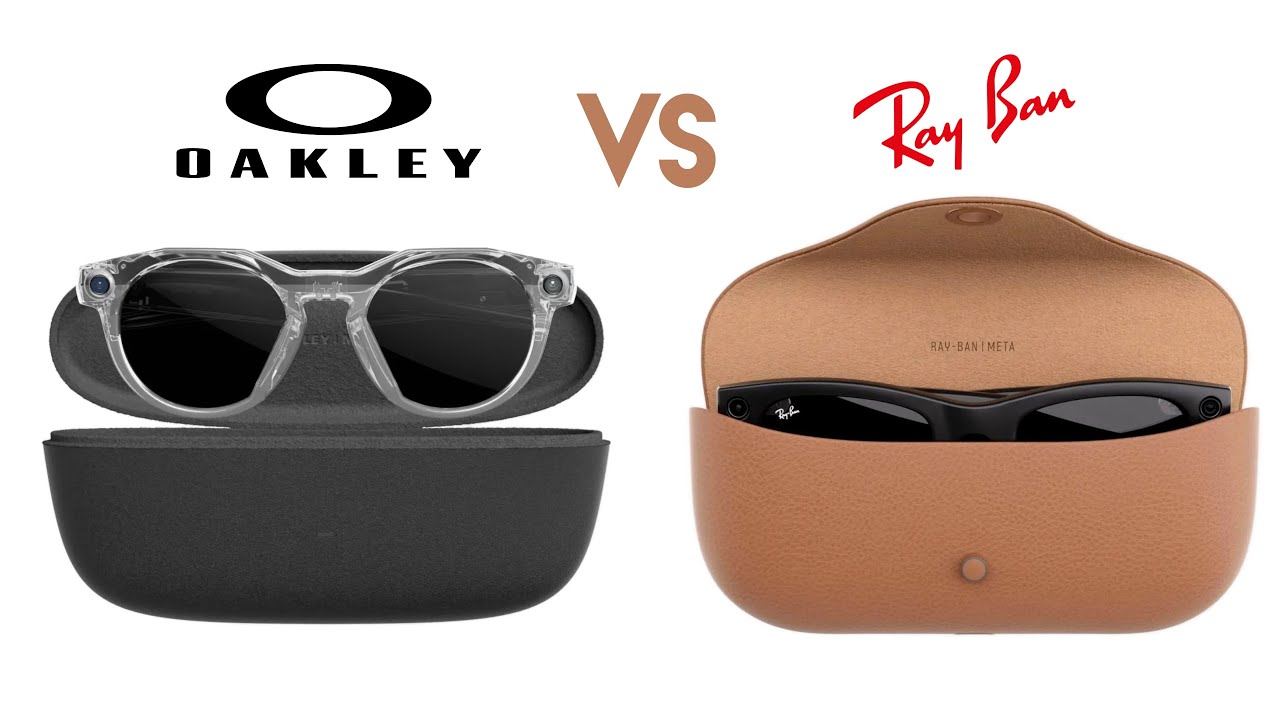
Meta’s 2025 product line demonstrates a deliberate effort to cover a broad consumer base—from tech enthusiasts to everyday users.
| Model | Key Focus | Price | Features |
|---|---|---|---|
| Oakley Meta Vanguard | Sports & Outdoor | $499 | 9-hour battery, HD camera, waterproof, impact-resistant |
| Ray-Ban Display | Premium AR/AI | $799 | Integrated AR lens, gesture band, translation, notifications |
This diversified strategy allows Meta to capture both the athletic and luxury segments, while maintaining a unified platform for apps and content.
However, the high price point remains a major obstacle. Consumers are hesitant to spend nearly $800 for a device still dependent on a smartphone for full functionality. The industry consensus is that affordable mid-range models will be essential for large-scale adoption.
Challenges: Battery, Comfort, and Privacy

Despite the excitement, Meta’s smart glasses face several hurdles:
- Battery Life – Average runtime of 5–6 hours limits continuous daily use.
- Weight & Comfort – At roughly 67 grams, extended wear can cause fatigue.
- Privacy Concerns – Always-on cameras raise ethical and social questions.
- Smartphone Dependency – Some functions still require a connected device.
These challenges highlight that while hardware progress is real, cultural acceptance and usability will determine the market’s trajectory.
Competitive Landscape: Meta Leads, but Rivals Are Rising

The smart glasses race is heating up. Chinese manufacturers Xiaomi and TCL-RayNeo are aggressively expanding into the market, especially in Asia. China alone is projected to account for 12% of global shipments by 2026.
Nevertheless, Meta remains the clear market leader, combining hardware innovation with strong brand partnerships and social integration.
Consumer reactions reflect cautious optimism. The Ray-Ban Meta line sold over 1 million units in 2024, with sales expected to double in 2025. Users praise real-time translation, navigation, design, and brand prestige, though they cite price and battery life as persistent pain points.
Expert Insight: From Hardware Wars to Experience Wars
Industry observers argue that the future of smart glasses will be defined less by optics or processors and more by software and ecosystem integration.
This insight reflects a broader shift: success will hinge on how well companies weave AI, data, and context into daily human behavior.
The Road Ahead: From Device to Lifestyle

The smart glasses revolution is no longer a speculative dream. Meta’s fusion of fashion, function, and AI is reshaping how people interact with technology. But to truly replace the smartphone, the industry must:
- Extend battery life and comfort for full-day wear
- Introduce affordable, entry-level models
- Build trust through transparent privacy policies
- Develop richer AI-driven apps that justify constant use
Ultimately, the competition will be won not by who builds the smartest device, but by who creates the most human experience.
Smart glasses, once seen as a futuristic experiment, are now entering their growth phase—and Meta, with its bold integration of AI and design, is leading the charge.




 Boss Brief
Leave a comment