
There was a time when the West believed that progress was inevitable — almost divine. Since the Enlightenment, “progress” has functioned like a secular religion: the belief that tomorrow must always be better than today, that the future is a linear ascent from ignorance to reason, from poverty to prosperity.
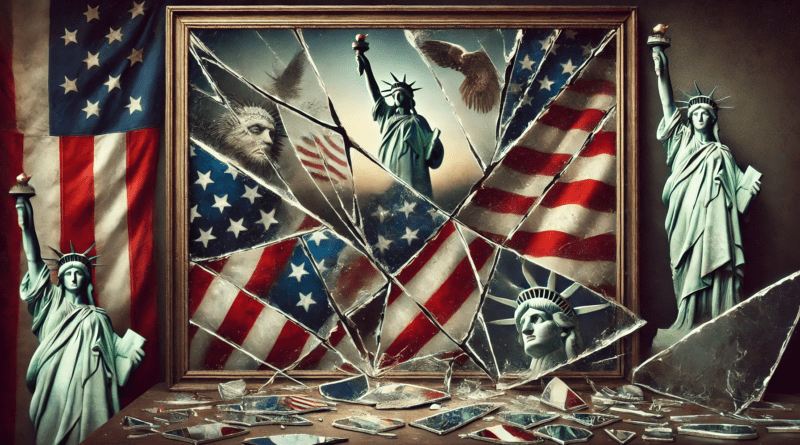
But that faith — the deepest conviction of Western modernity — has begun to crumble.
Today, a profound sense of loss defines Western societies more than hope or ambition. From Berlin to Boston, from Paris to Pittsburgh, people feel that something essential has slipped away: stability, purpose, confidence in the idea that history bends toward improvement. For the first time since 1945, loss has become the defining mood of Western life.
The question, Reckwitz argues, is no longer how to avoid loss — but whether societies built on “more and better” can endure the reality of “less and worse.”
The New Faces of Loss

The most visible loss is ecological.
Rising temperatures, collapsing ecosystems, and disappearing species have undermined humanity’s sense of control. The anxiety is not only about current disasters but about the anticipation of future catastrophe — what psychologists now call “climate anxiety.”
Even the solutions demand sacrifice. To fight climate change is to abandon the 20th-century lifestyle once celebrated as progress: mass consumption, cheap travel, endless energy. What once symbolized advancement now feels like decadence we can no longer afford.
Economic and demographic shifts deepen this malaise.
The old industrial heartlands — America’s Rust Belt, Northern England’s coal towns — now stand as monuments to decline. The postwar middle-class optimism that “each generation will live better than the last” has collapsed. Deindustrialization and hyper-competition have divided society into winners and losers, destabilizing what was once the moral center of Western life: the middle class.
Europe’s aging populations, shrinking rural communities, and eroding public infrastructure add to the sense of fatigue. America’s schools, Britain’s NHS, Germany’s transit networks — all show signs of exhaustion. The housing crisis, meanwhile, has turned security into a privilege. The very institutions that embodied the promise of liberal democracy now seem too fragile to sustain it.
And geopolitically, the dream of a liberal global order has shattered. The post–Cold War belief in the unstoppable spread of democracy and free markets has given way to a new era of conflict and fragmentation. Russia’s invasion of Ukraine, China’s assertiveness, and the paralysis of international institutions reveal that history does not always progress — it also regresses.
The Collapse of the Modern Myth
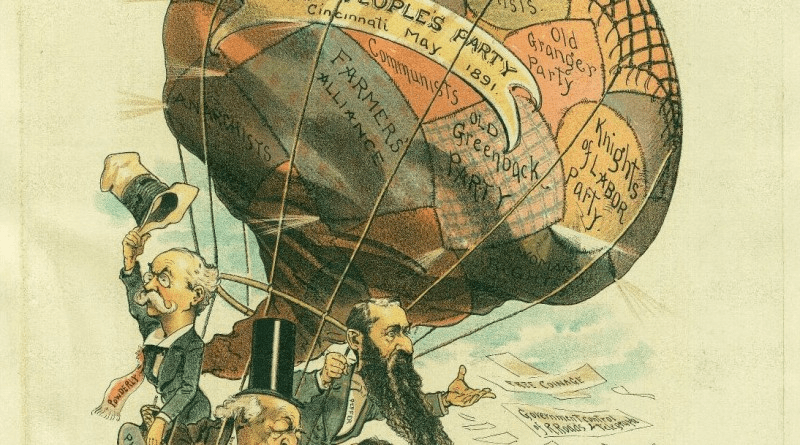
Loss itself is not new. But modernity’s refusal to acknowledge loss — its obsession with progress, growth, and self-optimization — was always its central illusion.
Science promised endless discovery, capitalism promised endless expansion, liberal democracy promised endless inclusion. These narratives left no room for decline. To lose was to fail.
Now, as faith in progress disintegrates, the West is forced to confront what it long denied. When the future no longer guarantees improvement, the experience of loss becomes existential. The fear that “things may never get better again” haunts the collective psyche.
This is the emotional vacuum in which populism flourishes.
Populist movements feed on the nostalgia of the declining classes — “Take back control,” “Make America great again.” They promise restoration where none is possible. Their energy comes from grief transmuted into anger, but the redemption they offer is an illusion.
Four Paths Beyond Progress

Reckwitz suggests that the West must find a new moral vocabulary — one that does not deny loss, but learns to live with it.
- The Politics of Resilience
Accept that crises cannot be avoided, only absorbed. Strengthen healthcare, stabilize housing, protect institutions, rebuild security alliances. Loss is inevitable, but its impact can be softened. - Revaluation of Loss
Some losses may be gains in disguise.
Abandoning fossil fuels and overconsumption might yield a more sustainable, even richer life. This is not a rejection of progress but a redefinition of it — from “faster and bigger” to “smarter and fairer.” - Redistribution of Loss
Inequality is not only about wealth but about who bears the costs of transition. Climate policies that hurt the poor deepen injustice. A fair society shares both profit and pain. - Integration of Loss
The hardest task is psychological.
Like grief therapy, we must neither deny nor obsess over what is gone, but integrate loss into the story of who we are. Only by accepting vulnerability can democracies regain authenticity and trust.
No Return to Yesterday

These strategies won’t bring back the 1960s welfare state, the cohesive middle class, or the global supremacy of the West. Those worlds are gone.
But acknowledging loss may itself become a form of progress — a more mature one.
If liberal democracy can stop promising endless growth and instead embrace honesty, resilience, and renewal, it may rediscover its strength.
Once, the West dreamed of a world without loss.
Now, its survival depends on learning how to live with loss — and still move forward.
Reader Responses
“Climate anxiety and low birth rates are deeply connected. Many young couples I know have decided not to have children because they don’t want to hand them an unlivable planet. That is the most personal form of loss imaginable.”
— North Carolina
“We are not actually in decline — we’re just bored. There are fewer wars, longer lifespans, cleaner air, safer cities. When material needs are met, people turn inward and find emptiness. Maybe the task isn’t learning to live with loss, but to rediscover meaning in abundance.”
— Louisiana
“Reckwitz prescribes resilience and revaluation, but these require functioning institutions, educated citizens, and free time — precisely what the crisis is destroying. Populism wins because it offers simplicity. His solutions assume stability we no longer have.”
— Unknown
“Much of what the West calls ‘loss’ is the rest of the world’s liberation — the end of colonial privilege, cheap labor, and ecological exploitation. Maybe the West hasn’t lost its way; it’s just lost its unfair advantage.”
— London



 Boss Brief
Leave a comment