
When Taylor Swift released her twelfth studio album “The Life of a Showgirl” on October 3, she didn’t just drop another pop record — she reset the bar for what a global artist can do.
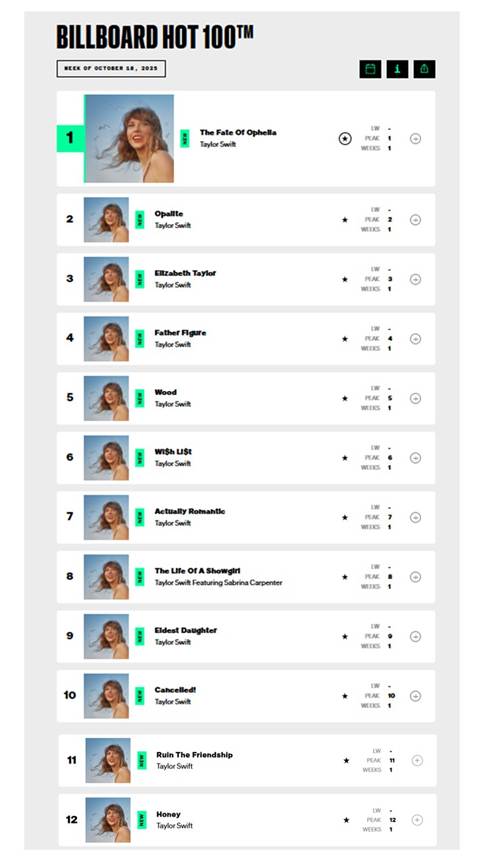
Within 24 hours, the album sold 2 million copies, hitting 4.02 million in its first week — a feat unseen in modern pop history. Swift became the first solo artist ever to reach 15 Billboard No.1 albums, trailing only The Beatles’ 19.

On the Billboard Hot 100, she did what no artist had done before: she occupied the entire Top 12 simultaneously.
It wasn’t merely a comeback — it was a cultural event.
From Billboard to Box Office
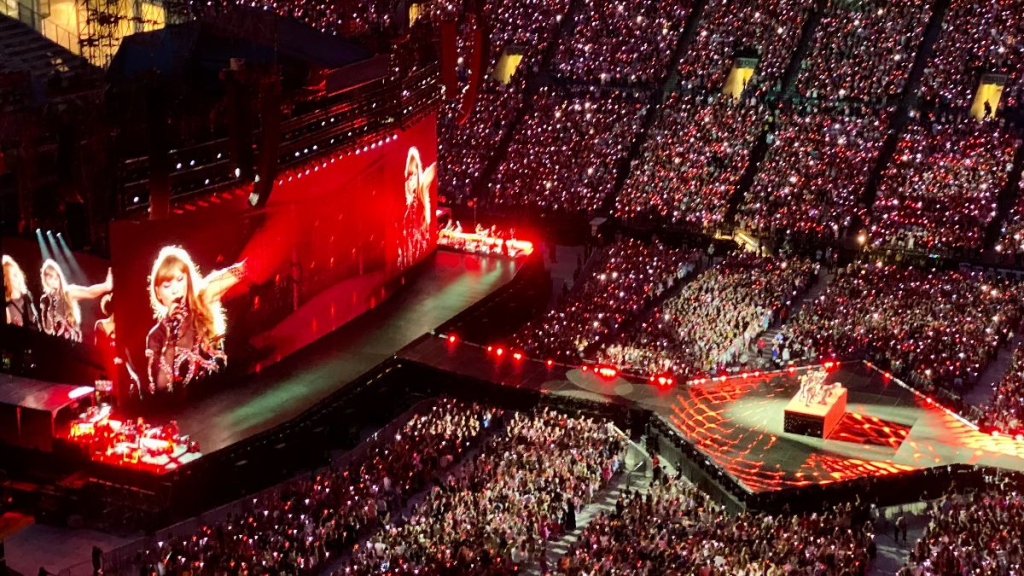
This time, the “Swiftquake” didn’t stop at streaming platforms.
In collaboration with AMC Theaters, Swift launched “The Official Release Party of a Showgirl” — a 90-minute cinematic experience blending music videos, behind-the-scenes footage, and intimate monologues.
The limited three-day run grossed $34 million, once again proving that Swift doesn’t just sell records — she moves industries.
AMC CEO Adam Aron called the project “an iconic intersection of music and cinema,” noting that Swift’s magic “now extends far beyond the charts.”
For context, Swift’s previous Eras Tour concert film (2023) earned $261 million worldwide, still the highest-grossing concert film in history.
The Birth — and Rebirth — of Swiftnomics

Economists once coined the term “Swiftnomics” to describe how Swift’s presence boosts local economies — from hotel occupancy to restaurant sales — whenever she tours.
But in 2025, Swiftnomics evolved again.
This time, the driver isn’t touring; it’s collectible consumer behavior.
Her new album was released in 38 different formats — spanning digital streaming, CD, cassette, and vinyl, alongside deluxe “jewelry editions,” acoustic cuts, and limited “voice memo” versions.
The Wall Street Journal reported that fans are now “purchasing albums not for listening, but for owning — as an act of devotion.”
A fan interviewed in New York admitted,
“I bought four CD versions of the same album.
I don’t even have a CD player — they’re just for display.”
Luminate data supports this: nearly half of U.S. vinyl buyers don’t own a record player.
Ownership, not function, is the new currency of fandom.
The Multi-Version Economy
According to market tracker Luminate, the top 10 best-selling U.S. albums in 2023 had an average of 8.9 physical versions, up from 3.3 in 2019.
This strategy taps into fans’ collector instincts while amplifying first-week sales — now a core metric in Billboard chart calculations.
Joel Arbagey, Executive VP at 19 Entertainment, explains:
“Streaming dominates music consumption, but devoted fans still crave tangible connection.
A physical album isn’t just music — it’s identity.”
Swift understood that instinct earlier than anyone.
By offering dozens of variants, she transformed the act of buying music into a form of participation.
Her six-hour-only digital “Deluxe So Punk on the Internet” version — available for one night only — crashed servers and flooded social media with screenshots, countdowns, and resale posts.
Swiftnomics and the American Entertainment Shift
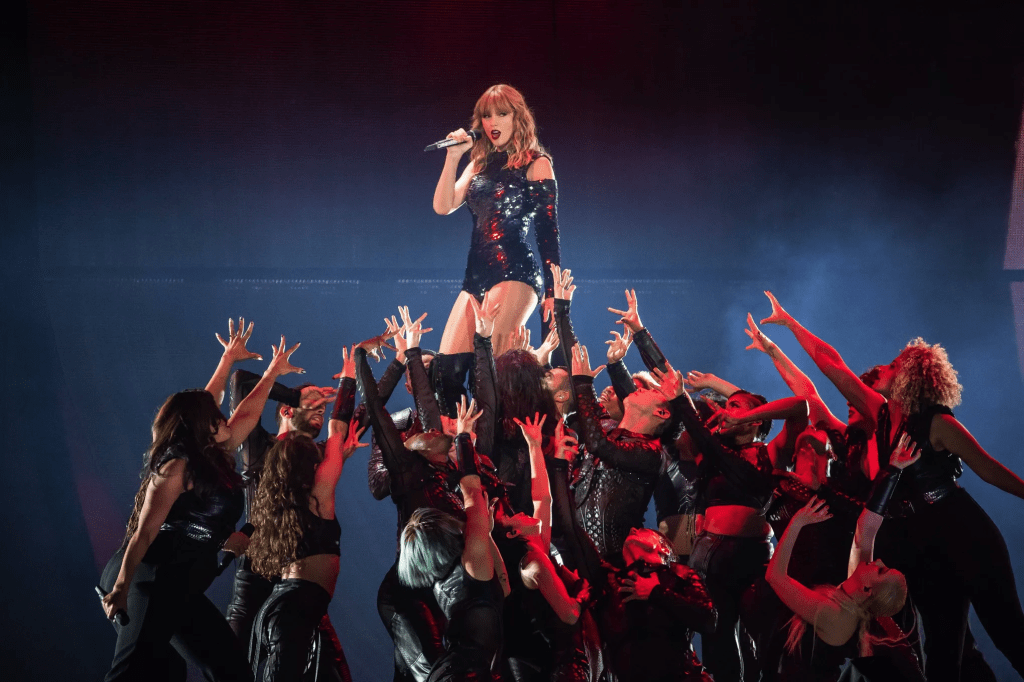
Swift’s model is forcing Hollywood and the U.S. entertainment economy to rethink their formulas.
Where streaming once eroded the perceived value of media, Swift has re-monetized scarcity — turning every edition, color variant, and theater event into a premium experience.
A New York-based consultant told KOTRA:
“Unboxing videos of Taylor’s limited albums go viral like luxury handbags.
Each version becomes its own story — its own marketing engine.”
Data shows that in 2024, top-selling albums averaged 33 unique versions, a number expected to rise further.
Labels are learning what K-pop fans have known for years: fandom is an economy.
Lessons for K-Content
For Korean entertainment and music companies, this U.S. market shift opens new doors.
K-pop has long excelled at limited editions, deluxe packaging, and immersive fan experiences.
Now, the U.S. industry is catching up — and looking for collaborators who already know how to build “fandom-driven ecosystems.”
Korean firms specializing in limited-edition albums, premium merchandise, fan-exclusive streaming, and theatrical concert releases can leverage this moment to expand their footprint in the U.S.
As one entertainment strategist summarized:
“The next era of music isn’t just about songs — it’s about stories, packaging, and participation.
Swift showed the world that emotion can be monetized.”
In Short
Taylor Swift’s “The Life of a Showgirl” isn’t just a record.
It’s a blueprint for the future of music consumption — where the border between art, commerce, and fandom completely disappears.
And once again, the American pop economy is dancing to her rhythm.



 Boss Brief
Leave a comment