
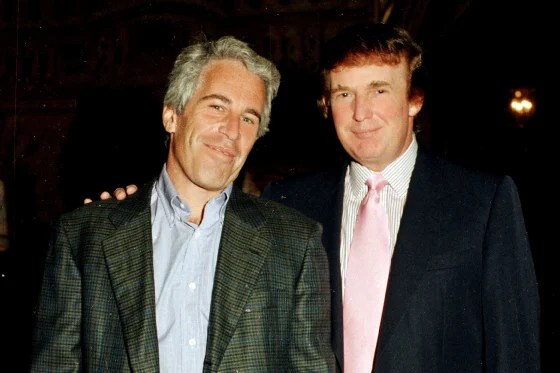
American politics has rarely felt this unmoored.
AI upheaval, a looming financial bubble, democratic backsliding, China’s scientific surge, Russia’s advances in Ukraine—
the world is on fire, and yet the American political class has spent the last several months obsessing over… Jeffrey Epstein.
A man who died six years ago.
A man Donald Trump reportedly last spoke to more than twenty years ago.
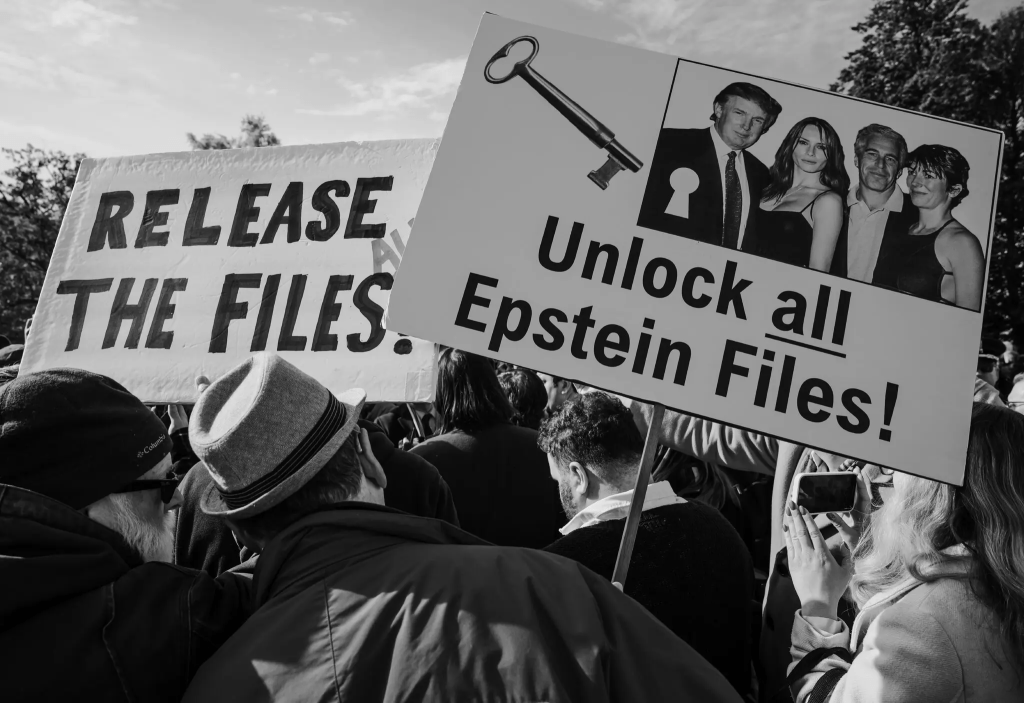
So why has Epstein become the defining political obsession of 2025?
Because the country has slipped deeply into a QAnon-style way of thinking—
a worldview where institutions are corrupt, elites are evil, and every lack of evidence becomes “proof” of a cover-up.
QAnon logic explains everything happening right now

The QAnon operating system is simple:
- Elites are inherently malicious.
- Government agencies are compromised.
- If investigators find no evidence,
→ that means they’re conspirators too.
That is how you get people convinced that Hillary Clinton was running an underground child sex ring from the basement of a D.C. pizza shop.
This is the mental universe where Epstein becomes irresistible:
a real criminal network involving powerful people did exist.
To the conspiratorial mind, that means all elites are Epstein, all institutions are corrupt, and America is run by a sprawling cabal.
It mirrors the logic of the John Birch Society, who insisted not only that Alger Hiss was a communist spy (he was)—
but that Dwight Eisenhower was one too.
And when law enforcement finds nothing?

That becomes “evidence” of the conspiracy**
The FBI and the DOJ have repeatedly said:
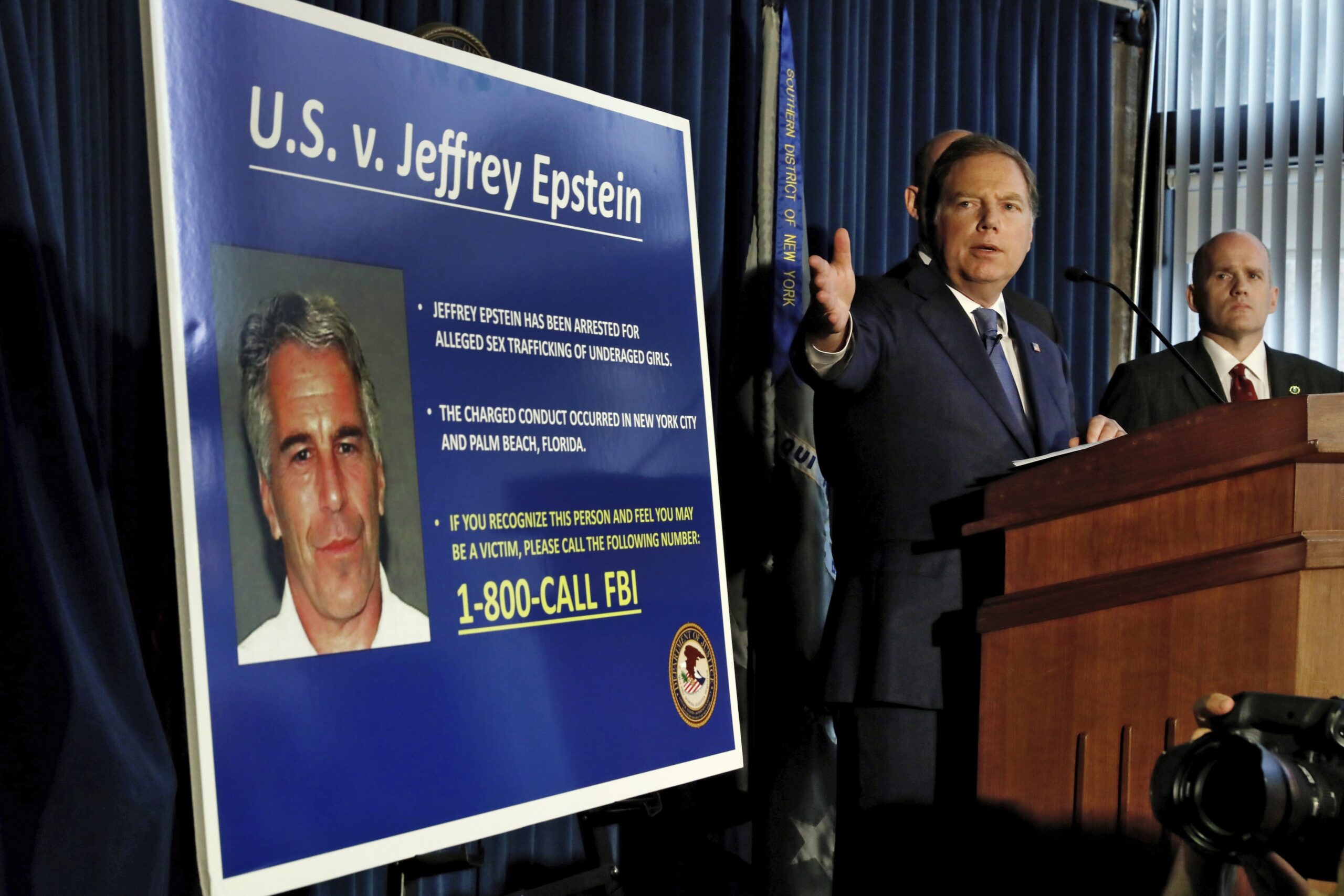
- There is no Epstein “client list.”
- There is no “blackmail archive.”
- There is no hidden trove of kompromat.
The conspiratorial response:
“Release all the files online and let the internet crowdsource the truth!”
Due process evaporates.
Every norm collapses.
The entire legal system becomes another shadowy actor in the conspiracy.
Meanwhile, influencers like Candace Owens go further, reframing Epstein as part of a “Jewish financial plot,” sliding effortlessly into open antisemitism.
The structure is identical to 1930s European conspiracy narratives.
The names change, the patterns don’t.
The problem becomes catastrophic when politicians amplify it

Conspiracy theories are inevitable at the margins of any society.
They become dangerous only when mainstream political actors weaponize them.
Trump does it.
Marjorie Taylor Greene does it.
Nancy Mace does it.
RFK Jr. does it.
“Who stole the 2020 election? A vast conspiracy!”
“Who runs America? The Deep State!”
“No need for democratic process—just expose the plot and the villains crumble.”
This worldview breeds cynicism, and cynicism erodes civic participation.
A cynical population turns away from institutions, until the only politics that thrives is destructive, nihilistic, burn-it-all populism.
This, as The Economist noted, is the autocrat’s playbook:
delegitimize institutions, then destroy them.
Then comes the most shocking twist:
Some Democrats have decided to join the game
This is the part David Brooks found bewildering.
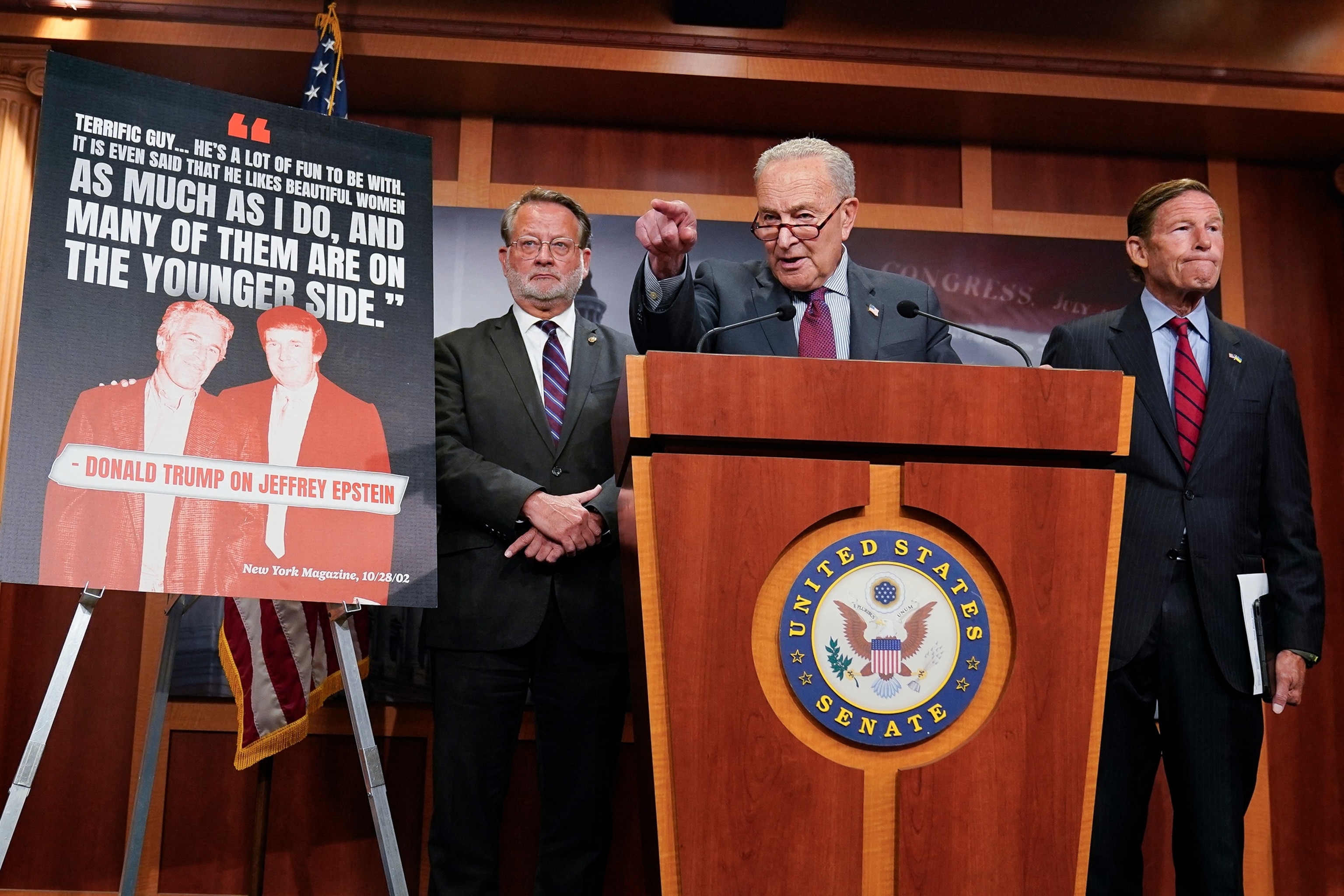
Rep. Ro Khanna—one of the most thoughtful and promising Democrats—
recently used the phrase “the Epstein class” in official remarks.
He said the term comes from voters, who ask whether he stands with
“forgotten Americans or the Epstein class.”
Khanna explains that many working-class voters see Epstein’s crimes as a symbol of:
- wealthy men exploiting young women
- a system so rotten that it protects predators
- and Trump as someone fighting that corrupt order
Brooks argues, bluntly, that this framing is irresponsible.
Elites are flawed, aloof, sometimes arrogant—
but they are not a class of collective sex offenders.
The language validates conspiratorial thinking at the exact moment when democracy needs its elected leaders to push back against it.
So what should Democrats do instead?
Brooks’s argument is restrained but sharp.
The message should not be
“elites betrayed you by harming you.”
It should be:
“Elites didn’t betray you—they ignored you.”
They didn’t intend to hurt you,
but they failed to see you.”
When industrial jobs disappeared in the 1970s—Democrats didn’t see.
When communities collapsed for decades—Democrats didn’t see.
When immigration changed social dynamics—Democrats didn’t see.
Working-class voters forced themselves back into politics, and the question now is:
“Who will actually improve your daily life?”
“Who can improve your health outcomes, your schools, your wages?”
“Will Trump’s war on science and institutions really help working families?”
Brooks argues Democrats must speak with moral clarity:
- Reject cynicism
- Reject class-war fantasy
- Reject conspiratorial thinking
- Rebuild trust
- Offer dignity, competence, and hope
Because conspiracy politics cannot produce governing coalitions—
only permanent tribal warfare.
Final argument

When real crises explode, Americans will look back on this moment and say,
‘What on earth were we doing?’
AI, China’s industrial ascendancy, geopolitical instability—
the stakes are existential.
And yet the U.S. political system is pouring its energy into a dead man’s scandal,
fueled by TikTok clips and weaponized disinformation.
Brooks ends on a sober, almost mournful note:
“Someday, when the real challenges bear down on us,
we’ll look back at the Epstein frenzy and ask:
What were we thinking?”



 Boss Brief
Leave a comment